
Understanding Archaeological Contexts
Expert-defined terms from the Professional Certificate in Archaeological Site Documentation: Recording Techniques course at London School of Business and Administration. Free to read, free to share, paired with a globally recognised certification pathway.
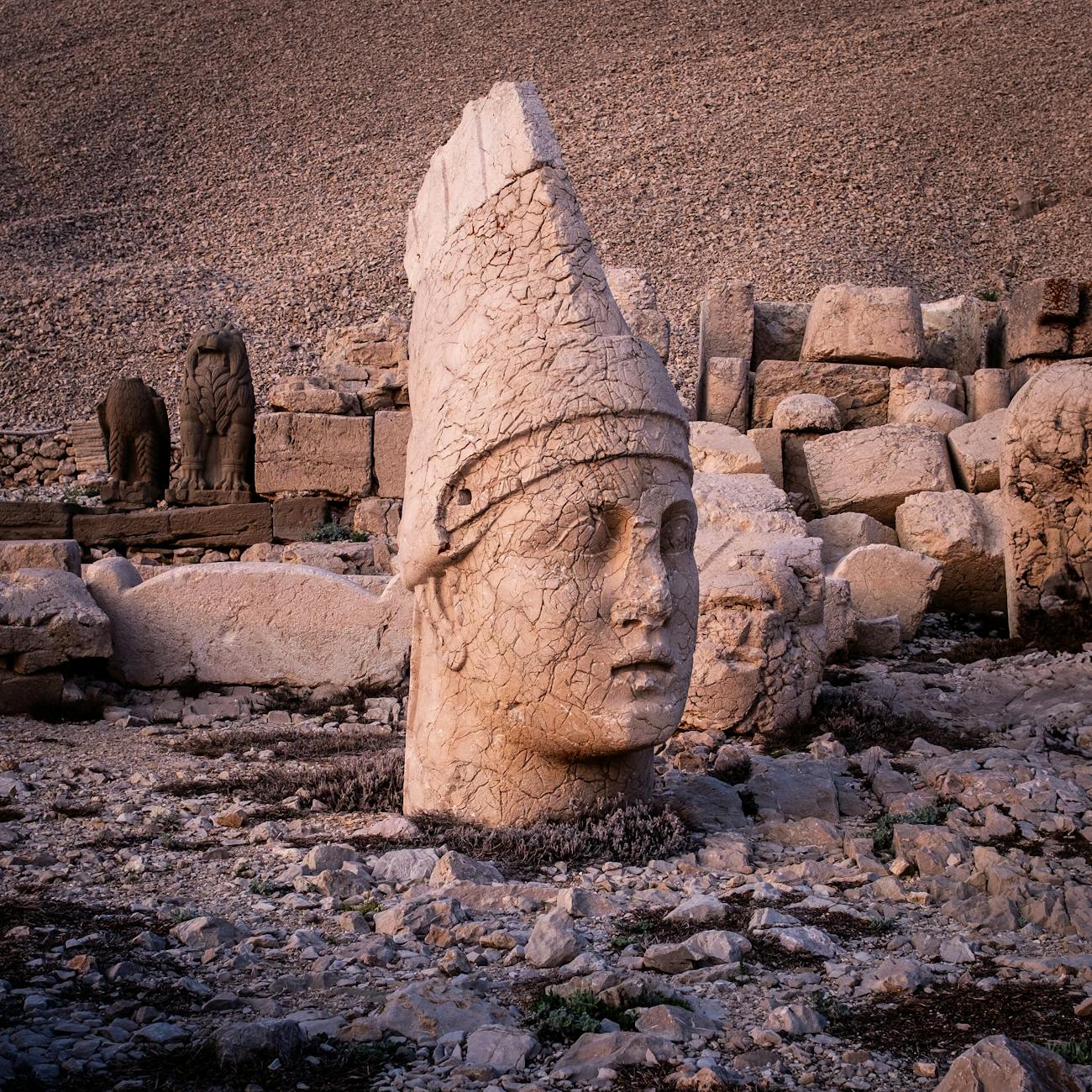
**Archaeological context #
** The archaeological context refers to the physical and temporal associations between artifacts, features, and other archaeological data. It is the fundamental unit of analysis in archaeology, providing information about the past that is meaningful and interpretable.
**Association #
** Association refers to the relationship between two or more archaeological features, artifacts, or ecofacts that are found in close proximity to one another. Association is an important concept in archaeology because it provides clues about the relationships between different elements of an archaeological site.
**Artifact #
** An artifact is any object that has been made or modified by humans. Artifacts can take many forms, including tools, pottery, weapons, ornaments, and architectural features. Artifacts provide important information about the material culture of past societies.
**Feature #
** A feature is a non-portable archaeological deposit or structure that is formed by human activity. Features can include architectural elements such as walls, floors, and hearths, as well as refuse pits, burials, and other cultural modifications to the landscape.
**Ecofact #
** An ecofact is a natural object that has been modified by human activity, such as a bone that has been modified for use as a tool. Ecofacts provide important information about the environment and subsistence practices of past societies.
**Stratigraphy #
** Stratigraphy is the study of the layering of archaeological deposits. It is based on the principle that younger deposits are laid down on top of older deposits, creating a sequence of layers that can be used to reconstruct the history of an archaeological site.
**Context sheet #
** A context sheet is a form used to record information about an archaeological context. It typically includes information about the location, description, and interpretation of the context, as well as any artifacts, features, or ecofacts that are associated with it.
**Horizontal excavation #
** Horizontal excavation is a method of excavation that involves removing soil from a site in horizontal layers. This method is used to expose large areas of a site and to record the spatial relationships between different archaeological features and artifacts.
**Vertical excavation #
** Vertical excavation is a method of excavation that involves removing soil from a site in vertical sections. This method is used to reveal the stratigraphy of a site and to date the different layers.
**Single context recording #
** Single context recording is a method of excavation that involves recording each archaeological context separately. This method is used to create a detailed record of the site that can be used for analysis and interpretation.
**Plan view #
** A plan view is a drawing that shows the layout of an archaeological site or feature from above. Plan views are used to record the spatial relationships between different elements of a site.
**Section drawing #
** A section drawing is a drawing that shows the vertical profile of an archaeological site or feature. Section drawings are used to record the stratigraphy of a site and to date the different layers.
**Photogrammetry #
** Photogrammetry is the use of photography to create accurate measurements and models of archaeological sites and features. It is used to create detailed records of sites that can be used for analysis and interpretation.
**Total station #
** A total station is a surveying instrument that is used to measure the distance and angle between points on an archaeological site. Total stations are used to create accurate plans and section drawings of sites.
**Geophysical survey #
** A geophysical survey is a non-invasive method of investigating archaeological sites that uses equipment to detect changes in the physical properties of the soil. Geophysical surveys can be used to identify archaeological features and to plan excavations.
**Archaeobotany #
** Archaeobotany is the study of plant remains from archaeological sites. It is used to reconstruct the environment and subsistence practices of past societies.
**Zooarchaeology #
** Zooarchaeology is the study of animal remains from archaeological sites. It is used to reconstruct the environment and subsistence practices of past societies.
**Absolute dating #
** Absolute dating is a method of dating archaeological artifacts and features that provides a specific date or range of dates. Examples include radiocarbon dating and dendrochronology.
**Relative dating #
** Relative dating is a method of dating archaeological artifacts and features that provides a relative date or range of dates. Examples include seriation and stratigraphy.
**Sampling strategy #
** A sampling strategy is a plan for selecting which parts of an archaeological site to excavate or survey. Sampling strategies are used to ensure that the data collected from a site are representative and reliable.
**Context matrix #
** A context matrix is a table that shows the relationships between different archaeological contexts. It is used to analyze the associations between different elements of a site and to interpret the site's history and function.
**Post #
excavation analysis:** Post-excavation analysis is the process of studying and interpreting the data collected from an archaeological site. It includes artifact analysis, faunal and floral analysis, and other specialized techniques that are used to understand the site's context and significance.
**Site report #
** A site report is a document that summarizes the results of an archaeological excavation or survey. It typically includes a description of the site, a discussion of the methods used to investigate it, and an interpretation of the data collected.
**Curation #
** Curation is the process of preserving and managing archaeological artifacts and records. It includes cataloging, labeling, and storing artifacts, as well as maintaining records and archives.
**Cultural resource management (CRM) #
** Cultural resource management (CRM) is the practice of managing archaeological sites and other cultural resources to ensure their preservation and protection. CRM professionals work in cultural resource management firms, government agencies, and other organizations to conduct archaeological surveys, excavations, and analyses, and to develop management plans for cultural resources.
**Cultural heritage #
** Cultural heritage refers to the tangible and intangible remains of human societies, including archaeological sites, monuments, buildings, landscapes, and traditions. Cultural heritage is an important part of our shared human history and identity, and it is protected and managed through legislation, policies, and programs.
**Public archaeology #
** Public archaeology is the practice of engaging the public in archaeological research, interpretation, and conservation. Public archaeologists work to promote public understanding and appreciation of archaeology, and to involve the public in the protection and management of cultural resources.
**Cultural tourism #
** Cultural tourism is the practice of traveling to experience the culture and heritage of a place. Cultural tourism can provide economic benefits to local communities, but it also presents challenges for the management and protection of cultural resources.
**Cultural resource law #
** Cultural resource law is the body of legislation and regulations that govern the management and protection of cultural resources. Examples include the National Historic Preservation Act in the United States, the Ancient Monuments and Archaeological Areas Act in the United Kingdom, and the UNESCO World Heritage Convention.
**Cultural landscape #
** A cultural landscape is a landscape that has been modified and shaped by human activity over time. Cultural landscapes are important cultural resources that reflect the history and identity of human societies.
**World Heritage Site #
** A World Heritage Site is a cultural or natural site that has been designated by UNESCO as having outstanding universal value. World Heritage Sites are protected and managed through international cooperation and coordination.
**Cultural property #
** Cultural property is a term used to describe movable or immovable cultural heritage that has significant cultural, historical, or artistic value. Cultural property is protected and managed through legislation, regulations, and international agreements.
**Cultural resource management plan #
** A cultural resource management plan is a document that outlines the policies and procedures for managing and protecting cultural resources. Cultural resource management plans are typically developed for archaeological sites, historic buildings, and other cultural resources that are owned or managed by government agencies, corporations, or other organizations.
**Cultural heritage tourism #
** Cultural heritage tourism is a form of tourism that focuses on the exploration and appreciation of cultural heritage resources. Cultural heritage tourism can provide economic benefits to local communities, but it also presents challenges for the management and protection of cultural resources.
**Cultural resources survey #
** A cultural resources survey is a systematic investigation of an area to identify and assess cultural resources. Cultural resources surveys are conducted to identify sites and resources that may be eligible for listing on the National Register of Historic Places or other cultural resource designations.
**Cultural resource compliance #
** Cultural resource compliance is the process of ensuring that projects and activities comply with cultural resource laws, regulations, and policies. Cultural resource compliance may involve conducting cultural resources surveys, preparing cultural resource management plans, and monitoring projects to ensure that they do not harm cultural resources.
**Cultural resource clearance #
** Cultural resource clearance is the process of obtaining approval from regulatory agencies for projects and activities that may affect cultural resources. Cultural resource clearance typically involves conducting cultural resources surveys, preparing cultural resource management plans, and obtaining permits or other approvals from regulatory agencies.
**Cultural resource management firm #
** A cultural