
Traffic Flow Theory
Expert-defined terms from the Professional Certificate in Transportation Modeling course at London School of Business and Administration. Free to read, free to share, paired with a globally recognised certification pathway.
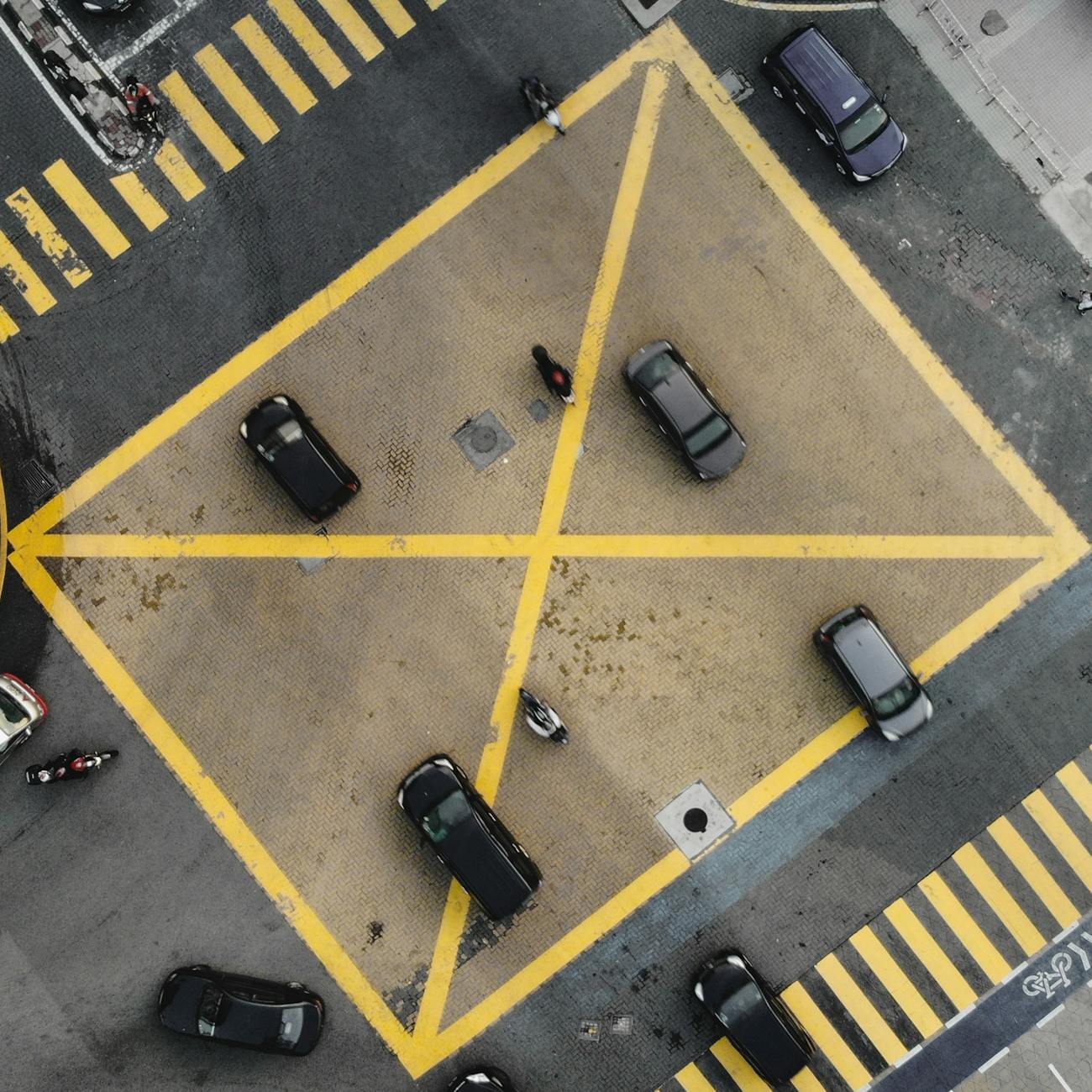
Acceleration is a fundamental concept in Traffic Flow Theory, referring t… #
It is an important factor in understanding traffic dynamics, as it affects the stability and safety of traffic flow. Acceleration is often used to model the behavior of drivers, particularly in situations where they need to adjust their speed, such as when approaching a merge or a intersection.
Active Traffic Management (ATM) is a strategy used to optimize traffic fl… #
It involves the use of real-time traffic data and intelligent transportation systems to manage traffic flow, reduce congestion, and minimize crashes. ATM systems can adjust traffic signal timings, ramp metering, and lane usage to optimize traffic flow and reduce travel times.
Adaptive Cruise Control (ACC) is a technology used in vehicles to… #
ACC systems use radar or lidar sensors to detect the distance and speed of the vehicle ahead and adjust the acceleration and braking accordingly.
Aggregated Traffic Assignment (ATA) is a method used to assign traffic… #
It involves aggregating the traffic demands from different origins and destinations and assigning them to the network using a traffic assignment algorithm.
Air Quality Modeling is a technique used to estimate the impact of… #
It involves using models to simulate the emissions of pollutants from vehicles and the dispersion of these pollutants in the atmosphere.
Alternative Routes are routes that can be used as substitutes for… #
They can be used to bypass congestion or road closures, or to reduce travel times.
Animal #
Vehicle Collisions (AVCs) are collisions between vehicles and wildlife. They can occur when animals enter the roadway and are struck by a vehicle, and can result in injuries or fatalities to both humans and animals.
Arterial Roads are roads that provide access to neighborhoods</… #
They are often multilane and have traffic signals at intersections.
Artificial Intelligence (AI) is a technology used to develop intellige… #
AI can be used to optimize traffic signal timings, predict traffic conditions, and detect incidents.
Assignment Models are models used to assign traffic volumes to a <… #
They can be used to estimate traffic volumes, optimize traffic signal timings, and evaluate the impact of transportation projects.
Automated Highway Systems (AHS) are systems that use automation an… #
They can be used to optimize traffic flow, reduce congestion, and improve safety.
Automated Traffic Surveillance (ATS) is a system used to monitor a… #
ATS systems can be used to detect incidents, track traffic conditions, and optimize traffic signal timings.
Average Annual Daily Traffic (AADT) is a measure of the average nu… #
It is often used to estimate traffic volumes and evaluate the impact of transportation projects.
Average Speed is a measure of the average speed of vehicles … #
It can be used to estimate travel times and evaluate the impact of transportation projects.
Bottlenecks are locations on a road or highway where tra… #
Bottlenecks can be caused by intersections, merges, or road closures.
Bureau of Public Roads (BPR) is a curve used to estimate the re… #
The BPR curve is often used to model traffic flow and estimate the impact of transportation projects.
Capacity is a measure of the maximum number of vehicles tha… #
It is often used to evaluate the impact of transportation projects and estimate traffic volumes.
Cell Transmission Model (CTM) is a model used to simulate traffic… #
The CTM model uses a discrete time step and a grid of cells to represent the roadway and simulate traffic flow.
Cellular Automata (CA) is a model used to simulate traffic flow on… #
The CA model uses a grid of cells to represent the roadway and simulate traffic flow using rules based on the behavior of drivers.
Centroid is a point that represents the center of a traf… #
It is often used as a reference point for traffic assignment and network analysis.
Channelized Intersection is a type of intersection that uses ch… #
Channelized Intersection is a type of intersection that uses channels or lanes to separate traffic flows and reduce conflicts.
Cordon Line is a boundary that separates a traffic zone or… #
It is often used to define the scope of a traffic study or analysis.
Cumulative Distribution Function (CDF) is a function used to describe<… #
It is often used to model traffic flow and estimate the impact of transportation projects.
Cycle Length is a measure of the time it takes for a traffic</b… #
It is often used to optimize traffic signal timings and reduce congestion.
Delay is a measure of the time it takes for a vehicle to tr… #
Delay is a measure of the time it takes for a vehicle to travel through a road or highway, taking into account stops and delays at intersections and merges.
Demand is a measure of the number of trips or vehicles</… #
Demand is a measure of the number of trips or vehicles that want to use a road or highway over a given period of time.
Density is a measure of the number of vehicles per unit … #
It is often used to model traffic flow and estimate the impact of transportation projects.
Detectors are devices used to measure traffic volumes, s… #
They can be used to monitor traffic conditions and optimize traffic signal timings.
Diverging Diamond Interchange (DDI) is a type of interchange that… #
Diverging Diamond Interchange (DDI) is a type of interchange that uses a diverging diamond shape to separate traffic flows and reduce conflicts.
Dynamic Traffic Assignment (DTA) is a method used to assign traffic</i… #
DTA can be used to estimate traffic volumes, optimize traffic signal timings, and evaluate the impact of transportation projects.
Emissions are pollutants released into the atmosphere by vehicl… #
Emissions can have a significant impact on air quality and public health.
Environmental Impact Assessment (EIA) is a process used to evaluate</b… #
EIA can be used to identify potential impacts and mitigate them through design changes or mitigation measures.
Evacuation Time is a measure of the time it takes to evacuate</… #
It is often used to evaluate the safety of a building or area and identify potential hazards.
Feedback Loop is a mechanism used to adjust traffic signal… #
Feedback loops can be used to optimize traffic signal timings and reduce congestion.
Floating Car Data (FCD) is a type of data collected from vehicl… #
FCD can be used to estimate traffic volumes, speed, and travel times.
Flow is a measure of the number of vehicles that pass a giv… #
Flow is a measure of the number of vehicles that pass a given point on a road or highway over a given period of time.
Freeway is a type of highway that is designed for high #
speed traffic with controlled access points. Freeways are often used to reduce congestion and improve safety.
Frequency is a measure of the number of times a vehicle<… #
Frequency is a measure of the number of times a vehicle or group of vehicles passes a given point on a road or highway over a given period of time.
Gap Acceptance is a behavior where a driver accepts a ga… #
Gap acceptance is often used to model merging behavior and estimate the impact of transportation projects.
Geographic Information System (GIS) is a tool used to analyze and… #
GIS can be used to estimate traffic volumes, optimize traffic signal timings, and evaluate the impact of transportation projects.
Green Time is a measure of the time during which a traffic … #
Green time is often used to optimize traffic signal timings and reduce congestion.
Headway is a measure of the time or distance between two <b… #
Headway is often used to model traffic flow and estimate the impact of transportation projects.
High #
Occupancy Vehicle (HOV) is a type of vehicle that is designed to carry multiple passengers. HOV lanes are often used to reduce congestion and improve air quality.
Incident is an event that disrupts traffic flow, such as a cras… #
Incidents can have a significant impact on traffic conditions and travel times.
Inductive Loop is a type of detector that uses a loop of <i… #
Inductive loops are often used to measure traffic volumes and speed.
Intelligent Transportation System (ITS) is a system that uses advanced… #
ITS can be used to optimize traffic signal timings, detect incidents, and provide real-time traffic information.
Intersection is a location where two or more roads or highways<… #
Intersections can be signalized or unsignalized, and can have a significant impact on traffic conditions and travel times.
Island is a raised area in the roadway that separates</b… #
Islands can be used to improve safety and reduce congestion.
Junction is a location where two or more roads or highways … #
Junctions can be signalized or unsignalized, and can have a significant impact on traffic conditions and travel times.
Kalman Filter is a mathematical algorithm used to estimate the … #
The Kalman filter is often used to estimate traffic volumes and speed.
Lane is a strip of roadway that is marked for use by… #
Lanes can be dedicated to specific types of traffic, such as buses or high-occupancy vehicles.
Level of Service (LOS) is a measure of the quality of traffic</… #
LOS is often used to evaluate the impact of transportation projects and estimate traffic volumes.
Link is a segment of roadway that connects two nodes … #
Links can be used to represent roads or highways in a traffic model.
Macroscopic Model is a type of model that represents traffi… #
Macroscopic models can be used to estimate traffic volumes and speed.
Merge is a location where two or more streams of traffic combin… #
Merges can be used to connect roads or highways and can have a significant impact on traffic conditions and travel times.
Mesoscopic Model is a type of model that represents traffic… #
Mesoscopic models can be used to estimate traffic volumes and speed.
Microscopic Model is a type of model that represents traffi… #
Microscopic models can be used to estimate traffic volumes and speed.
Modal Split is a measure of the proportion of trips made by… #
Modal split is often used to evaluate the impact of transportation projects and estimate traffic volumes.
Mode Choice is a decision made by a traveler to use a particular <… #
Mode choice is often influenced by factors such as time, cost, and convenience.
Network is a system of roads or highways that are connec… #
Networks can be used to represent traffic flow and estimate traffic volumes.
Node is a point in a network where two or more links meet #
Nodes can be used to represent intersections or interchanges in a traffic model.
Occupancy is a measure of the proportion of time that a … #
Occupancy is often used to evaluate the impact of transportation projects and estimate traffic volumes.
Origin #
Destination (OD) Matrix is a table that shows the number of trips made between different origin and destination zones. OD matrices are often used to estimate traffic volumes and evaluate the impact of transportation projects.
Parking is a facility that provides space for vehicles</… #
Parking facilities can be used to reduce congestion and improve air quality.
Passenger Car Equivalent (PCE) is a measure of the equivalent numb… #
PCE is often used to estimate traffic volumes and evaluate the impact of transportation projects.
Peak Hour is a period of time during which traffic demand i… #
Peak hours are often used to evaluate the impact of transportation projects and estimate traffic volumes.
Pedestrian is a person who is walking or biking on a roa… #
Pedestrians can be vulnerable to crashes and injuries, and can have a significant impact on traffic conditions and travel times.
Phase is a period of time during which a traffic signal is… #
Phases are often used to optimize traffic signal timings and reduce congestion.
Public Transportation is a mode of transportation that is available</b… #
Public transportation can be used to reduce congestion and improve air quality.
Queue is a line of vehicles that are waiting to merge</i… #
Queues can be used to estimate traffic volumes and evaluate the impact of transportation projects.
Ramp is a connection between a road or highway and a fre… #
Ramps can be used to connect roads or highways and can have a significant impact on traffic conditions and travel times.
Ramp Metering is a strategy used to regulate the flow of tr… #
Ramp metering can be used to reduce congestion and improve safety.
Route is a path that a vehicle or group of vehicles takes t… #
Routes can be used to estimate traffic volumes and evaluate the impact of transportation projects.
Route Choice is a decision made by a driver to use a particular <i… #
Route choice is often influenced by factors such as time, distance, and convenience.
Saturation Flow Rate is a measure of the maximum number of vehi… #
Saturation flow rate is often used to estimate traffic volumes and evaluate the impact of transportation projects.
Signal Coordination is a strategy used to coordinate the timing… #
Signal coordination can be used to improve safety and reduce travel times.
Simulator is a tool used to simulate traffic flow and evaluate<… #
Simulators can be used to estimate traffic volumes, optimize traffic signal timings, and improve safety.
Speed is a measure of the rate at which a vehicle or gro… #
Speed is often used to estimate traffic volumes and evaluate the impact of transportation projects.
Split is a division of traffic flow into two or more streams</b… #
Splits can be used to connect roads or highways and can have a significant impact on traffic conditions and travel times.
Stop is a location where a vehicle or group of vehicles mus… #
Stops can be used to control traffic flow and improve safety.
Street is a public road that is maintained by a local</b… #
Streets can be used to connect neighborhoods and commercial areas.
Traffic Assignment is a process used to assign traffic volu… #
Traffic assignment can be used to estimate traffic volumes and evaluate the impact of transportation projects.