
Copyright Law and Protection
Copyright is a form of statutory protection that grants the creator of an original work of authorship the exclusive right to control the reproduction, distribution, public performance, public display, and creation of derivative works. The p…
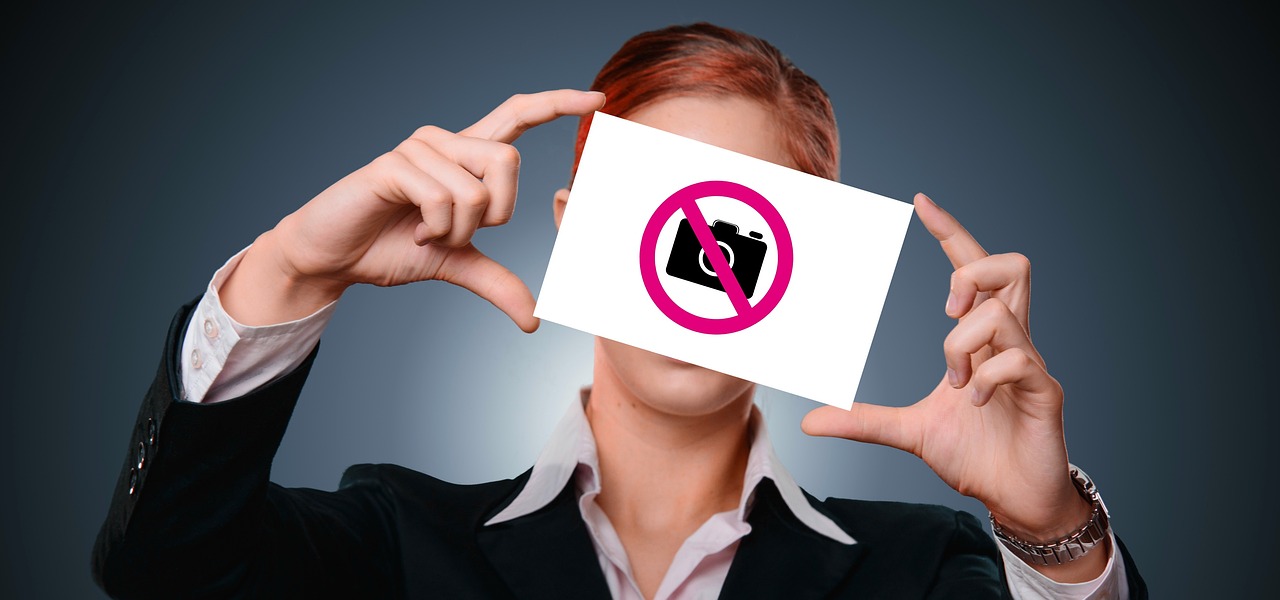
Copyright is a form of statutory protection that grants the creator of an original work of authorship the exclusive right to control the reproduction, distribution, public performance, public display, and creation of derivative works. The protection applies automatically upon the work’s fixation in a tangible medium, meaning that the work must be expressed in a form that can be perceived, reproduced, or otherwise communicated for more than a fleeting instant. For example, a novel typed on a computer hard drive, a song recorded on a digital audio file, and a painting captured in a high‑resolution photograph are all protected because each is fixed in a medium that endures beyond a momentary flash.
The concept of originality is central to copyright eligibility. Originality does not require novelty or uniqueness; it merely demands that the work be the product of the author’s own intellectual labor and that it contain at least a minimal degree of creativity. A simple list of common ingredients, for instance, would not meet the originality threshold, whereas a creatively arranged recipe that includes original commentary and expressive language would. The “modicum of creativity” standard is intentionally low, ensuring that a broad range of expressive works receive protection while still excluding purely factual compilations that lack any authorial flair.
Fixation is the requirement that a work be captured in a sufficiently permanent form so that it can be perceived, reproduced, or otherwise communicated for more than a transitory period. In the digital age, fixation can occur in a variety of formats: a Word document saved on a cloud server, a video uploaded to a streaming platform, or even a series of code snippets stored in a version‑control repository. The key point is that the work must exist in a stable medium that can be accessed and reproduced. A live improvisational performance that is not recorded, however, would not be fixed and therefore would not be protected until it is captured in some tangible medium.
The set of rights granted to a copyright holder are known as the exclusive rights. These rights include: (1) the right to reproduce the work, (2) the right to prepare derivative works, (3) the right to distribute copies to the public, (4) the right to perform the work publicly, and (5) the right to display the work publicly. Each of these rights may be exercised, licensed, or transferred independently. For example, a photographer may grant a magazine a license to publish a photograph (public display) while retaining the right to sell prints (distribution) and to authorize adaptations such as a digital collage (derivative work).
A derivative work is a new creation that incorporates, adapts, or transforms a pre‑existing copyrighted work. The underlying work must be protected for the derivative work to be protected; if the original is in the public domain, the derivative can only claim protection for the new material contributed by the author. Common examples include translations, musical arrangements, film adaptations of novels, and software modifications. The copyright owner of the original work retains control over the creation of derivative works, meaning that any party wishing to produce a derivative must obtain permission unless an exception such as fair use applies.
Fair use is a doctrine that allows limited use of copyrighted material without the permission of the rights holder, provided that such use meets certain statutory factors. The four statutory factors are: (1) the purpose and character of the use, including whether the use is commercial or for nonprofit educational purposes; (2) the nature of the copyrighted work; (3) the amount and substantiality of the portion used in relation to the whole work; and (4) the effect of the use on the potential market for or value of the original work. A transformative use that adds new expression, meaning, or message—such as a parody or a scholarly critique—often weighs in favor of fair use, whereas a verbatim reproduction of a large portion of a bestseller for commercial resale would likely not.
The concept of moral rights is distinct from the exclusive rights and focuses on the personal and reputational interests of the author. Moral rights typically include the right of attribution (the right to be recognized as the author) and the right of integrity (the right to object to derogatory treatments of the work). In many jurisdictions, moral rights are inalienable and may persist even after the economic rights have been transferred. For example, a sculptor may retain the right to be credited for a public monument even if a museum holds the copyright to photographs of the sculpture.
A work made for hire is a special category of authorship where the employer, not the individual creator, is deemed the author for copyright purposes. This classification applies when (1) the work is created by an employee within the scope of employment, or (2) the work is a specially commissioned piece that falls within one of the nine statutory categories (such as a contribution to a collective work, a translation, or a software program) and a written agreement expressly states that it is a work made for hire. In such cases, the commissioning party owns the copyright from the moment of creation, and the individual creator does not retain any ownership interest unless otherwise agreed.
The term collection refers to a compilation of pre‑existing works that are assembled into a new whole, such as an anthology of poems or a database of scientific articles. The copyright in a collection protects the selection and arrangement of the constituent works, but not the underlying works themselves unless they are also original. For instance, a publisher who assembles a series of classic short stories into a single volume may hold copyright in the anthology’s unique ordering and editorial commentary, while each story’s original author retains copyright in the text itself.
Joint authorship arises when two or more individuals collaborate to create a work, and each contributes an inseparable part of the overall expression. Joint authors must intend to merge their contributions into a single work, and each holds an undivided interest in the entire copyright. As a result, any joint author may independently license or enforce the entire work, subject to accounting obligations to co‑authors. For example, two songwriters who each compose half of a melody and half of the lyrics are joint authors and can each grant a license for the full song, provided they share any resulting royalties.
The duration of copyright protection varies by jurisdiction but generally follows a life‑plus‑70‑years formula for works created by individuals. This means that the copyright expires 70 years after the death of the last surviving author. For works made for hire, anonymous works, or pseudonymous works, the term is often a fixed number of years from the date of publication (commonly 95 years from publication or 120 years from creation, whichever is shorter). Once a work’s term expires, it enters the public domain, where it can be freely used by anyone without permission.
Registration is not required for copyright to exist, but it provides significant procedural advantages. In the United States, for example, registration is a prerequisite for filing an infringement lawsuit; it also allows the copyright holder to seek statutory damages and attorney’s fees, which can be far more lucrative than actual damages alone. Registration is typically achieved by submitting an application form, a copy of the work, and a filing fee to the relevant government agency.
When a party reproduces, distributes, or publicly displays a copyrighted work without permission, they may be liable for copyright infringement. Infringement can be either direct (the unauthorized act itself) or indirect (contributory or vicarious liability). Direct infringement requires that the infringer performed one of the exclusive rights. Contributory infringement occurs when a party, with knowledge of the infringing activity, materially contributes to it (e.g., a website that hosts user‑uploaded copyrighted files). Vicarious infringement arises when a party has the right and ability to control the infringing activity and receives a direct financial benefit from it (e.g., a marketplace that profits from sales of pirated goods).
The legal system provides several remedies for copyright infringement. An injunction is a court order that halts ongoing infringing activity and prevents future violations. Injunctions can be temporary (preliminary) or permanent, depending on the circumstances. Actual damages require proof of the specific monetary loss suffered by the copyright holder, while statutory damages offer a set range of monetary awards (often $750 to $30,000 per work, and up to $150,000 for willful infringement) regardless of actual loss. The availability of statutory damages is a powerful deterrent, especially for small‑scale infringers who might otherwise escape liability due to the difficulty of proving precise financial harm.
In the digital environment, the Digital Millennium Copyright Act (DMCA) provides a framework for balancing the interests of rights holders and online service providers. Under the DMCA’s safe harbor provisions, an internet service provider (ISP) can avoid liability for user‑uploaded infringing content if it meets certain conditions: (1) the ISP must not have actual knowledge of the infringement; (2) it must not be aware of facts that would make the infringing activity apparent; (3) upon obtaining knowledge, it must act expeditiously to remove or disable access to the material; and (4) it must implement a policy for terminating repeat infringers. The DMCA also establishes a notice‑and‑takedown process, whereby a rights holder can submit a written complaint to an ISP demanding removal of infringing material. The ISP must then promptly remove the material to preserve its safe harbor protection, unless the alleged infringer submits a counter‑notice asserting legitimate use.
The anti‑circumvention provisions of the DMCA prohibit the manufacturing, distribution, or use of tools that circumvent technological protection measures (TPMs) such as encryption, digital rights management (DRM), or access controls. For example, a software program that decrypts a DVD’s CSS encryption for the purpose of copying the contents would be illegal under the anti‑circumvention rules, even if the copying itself might qualify as fair use. However, the law also contains limited exemptions that are reviewed and updated every three years by the Copyright Office, allowing certain categories of research, security testing, and preservation activities to legally bypass TPMs under narrowly defined circumstances.
A license is a contractual grant of permission that allows a licensee to exercise one or more of the exclusive rights without transferring ownership of the underlying copyright. Licenses can be exclusive (granting only the licensee the right to use the work in a particular way) or non‑exclusive (allowing the licensor to grant the same right to multiple parties). An exclusive license in a specific field of use (e.g., “the exclusive right to distribute the software in North America”) can be valuable, because it creates a competitive advantage for the licensee. Conversely, a non‑exclusive license might be used by a publisher to allow numerous educational institutions to copy a textbook for classroom use.
The concept of first sale doctrine (also known as the "exhaustion" doctrine) limits the copyright holder’s control over a particular copy of a work after it has been lawfully sold or transferred. Once a physical copy is sold, the purchaser is free to resell, lend, or otherwise dispose of that specific copy without the copyright owner’s permission. The doctrine does not apply to digital copies that are licensed rather than sold, which is why many e‑book platforms impose restrictions on sharing or transferring files. The first sale doctrine also underpins the legality of used‑book stores, thrift shops, and libraries.
A public domain work is one that is no longer protected by copyright, either because the term has expired, the work was never eligible for protection, or the rights holder voluntarily relinquished the rights (often through a dedication such as Creative Commons Zero). Public domain works can be freely copied, adapted, and commercialized without permission or payment. For instance, the text of Shakespeare’s plays is in the public domain, allowing anyone to publish new editions, stage performances, or derivative films without needing a license. However, new creative additions—such as a modern translation or a musical score accompanying a public domain play—are themselves protected, creating a layered set of rights.
The orphan works problem arises when a copyrighted work’s owner cannot be identified or located, making it difficult or impossible to obtain permission for lawful use. Orphan works pose a challenge for libraries, archives, and digital platforms that wish to preserve and make such works accessible. Some jurisdictions have introduced limited statutory licenses that allow the use of orphan works after a diligent search, provided that the user pays a reasonable fee if the owner later emerges. The United States has not yet enacted a comprehensive orphan works regime, leaving many institutions uncertain about the legality of digitizing and distributing older, out‑of‑print materials.
A growing challenge for copyright law is the treatment of AI‑generated works. When an artificial intelligence system creates a piece of music, artwork, or text without direct human authorship, the question arises as to whether the resulting work can be protected at all, and if so, who holds the copyright. Current statutes generally require a human author to claim ownership, meaning that purely machine‑generated outputs may fall into the public domain. Some proposals suggest granting rights to the programmer, the user who supplied the prompts, or establishing a new category of “computer‑generated” works, but the legal landscape remains unsettled. This uncertainty impacts industries ranging from video game development (where procedural generation is common) to advertising (where AI tools produce custom graphics).
The right of first publication is an exclusive right that allows the copyright owner to control the first public distribution of a work. This right is particularly important for unpublished works, where the author can prevent anyone else from making the work public before the author chooses to do so. For example, a manuscript that has not been released can be protected from unauthorized leaks, and the author can strategically time the release to maximize impact and commercial value.
A collective work is a compilation that brings together independent works into a single volume, such as a magazine, anthology, or database. The copyright in a collective work protects the selection and arrangement of the constituent pieces, but not the underlying works themselves unless they are also original. Contributors to a collective work usually retain copyright in their individual pieces, unless they sign a separate agreement transferring those rights. This distinction is crucial for editors who must negotiate licenses with each contributor before assembling the final product.
The term public performance right covers the right to perform a copyrighted work in a public setting, whether live or via a transmission. This right applies to works such as plays, musical compositions, movies, and even software that includes audiovisual elements. Venues that host concerts, theaters, or streaming platforms must secure licenses from performing rights organizations (PROs) that represent composers and lyricists. Failure to obtain a performance license can result in statutory damages similar to those for other types of infringement.
The right of public display is analogous to the public performance right but focuses on the visual presentation of a work. For instance, a gallery that exhibits a photograph must obtain permission from the photographer, and a website that shows an image must secure a display license. The right of public display also extends to digital transmissions of still images, such as slideshows shown during a conference.
A mechanical license is a specific type of license that allows the reproduction and distribution of a musical composition in the form of sound recordings. In the United States, the compulsory mechanical license is triggered once a song has been released to the public, allowing other parties to record and distribute their own versions upon payment of a statutory royalty rate. This system balances the interests of songwriters (who receive royalties) with the public’s interest in fostering a vibrant market for cover versions and new recordings.
The sync license (short for synchronization license) is required when a musical composition is combined with visual images, such as in a film, television show, advertisement, or video game. The sync license grants the right to “synchronize” the music with moving pictures, and it is negotiated directly with the music publisher or rights holder. Because sync licenses are often tied to the specific context and audience of the audiovisual work, they can command substantial fees, especially for popular songs used in high‑profile commercials or blockbuster movies.
In the realm of software licensing, copyright protects the source code and object code as literary works, while patents may protect the functional aspects of the software. Licenses for software can be “proprietary,” requiring users to agree to limited usage terms, or “open source,” granting broad rights to modify and redistribute the code under specified conditions. Open‑source licenses such as the GNU General Public License (GPL) impose “copyleft” requirements that any derivative works must be distributed under the same license, ensuring that the freedom to use and modify the software is preserved downstream.
Copyright notice is a statement placed on a work indicating the claim of copyright, typically comprising the © symbol, the year of first publication, and the name of the rights holder (e.g., © 2023 Jane Doe). While not required for protection, a notice serves several practical purposes: it informs the public of the existence of a claim, deters inadvertent infringement, and can affect the calculation of damages in some jurisdictions by negating a presumption of innocent infringement.
The statutory damages regime is designed to compensate rights holders when actual damages are difficult to prove. The amount awarded depends on factors such as the willfulness of the infringement, the number of works infringed, and the potential market harm. In many cases, courts award the maximum statutory amount to send a strong deterrent signal, especially in cases of large‑scale piracy or systematic infringement. Conversely, for non‑willful or first‑time offenders, courts may reduce the award to the minimum statutory amount.
A copyright assignment is a transfer of ownership of the copyright from the original author to another party. Assignments must be in writing and signed by the assignor to be enforceable. Once an assignment is complete, the new owner holds all exclusive rights and may further license, enforce, or transfer the copyright. Assignments are common in publishing contracts, where an author may assign the rights to a publisher in exchange for an advance and royalties.
The copyright holder may also engage in licensing negotiations to monetize the work. Licensing agreements typically outline the scope of the license (geographic territory, medium, duration), royalty rates, payment schedules, and quality control provisions. For example, a film studio may license a novel for adaptation, specifying that the resulting movie must credit the author, that the studio will pay an upfront option fee, and that royalties will be paid based on box‑office receipts. Effective licensing strategies can generate multiple revenue streams from a single work, including merchandising, translation, and digital distribution.
The first sale doctrine intersects with digital rights management (DRM) in a complex way. While the doctrine permits the resale of a physical book, a digital e‑book that is licensed rather than sold is not subject to the same exhaustion principle. Consequently, many e‑book platforms restrict the ability to transfer files, citing contractual license terms that supersede the first sale doctrine. This has led to legal challenges in several jurisdictions, where courts are asked to determine whether the licensing model is a legitimate means of circumventing the traditional exhaustion rule.
A copyright infringement lawsuit typically proceeds through several stages: (1) the complaint alleges specific acts of infringement and identifies the copyrighted works; (2) the defendant may file motions to dismiss, argue lack of jurisdiction, or challenge the validity of the copyright; (3) discovery allows both parties to exchange evidence, such as copies of the alleged infringing material and records of licensing negotiations; (4) settlement negotiations often occur before trial, as parties weigh the cost of litigation versus potential damages; and (5) if the case proceeds to trial, the court evaluates whether the defendant performed any of the exclusive rights without authorization and, if so, determines the appropriate remedy.
In many cases, parties opt for an alternative dispute resolution (ADR) process such as mediation or arbitration to resolve copyright disputes more efficiently. ADR can preserve business relationships, reduce legal expenses, and provide more flexible outcomes. For instance, a music label and a streaming service might agree to mediate a royalty dispute, resulting in a revised licensing agreement that reflects current market conditions rather than a prolonged court battle.
The digital rights management (DRM) technologies are designed to enforce copyright policies by restricting how users can copy, share, or modify digital content. DRM can take the form of encryption keys, license servers, or watermarking. While DRM helps rights holders control distribution, it also raises concerns about consumer rights, accessibility, and interoperability. Critics argue that overly restrictive DRM can impede legitimate uses such as format shifting for personal use, and can create barriers for users with disabilities who rely on assistive technologies.
A copyright infringement notice is a formal communication sent by a rights holder to an alleged infringer, demanding cessation of the infringing activity. The notice typically includes identification of the copyrighted work, a description of the infringing conduct, a request for removal or cessation, and a deadline for compliance. In many jurisdictions, failure to comply with a properly drafted notice can lead to heightened damages or the loss of safe harbor protection for online platforms.
The concept of copyright exhaustion extends beyond the first sale doctrine to include the termination of licensing rights after a certain period. For example, some contracts grant a publisher exclusive rights for a term of five years, after which the rights “exhaust” and revert to the author, who may then renegotiate or self‑publish. Exhaustion provisions are crucial for authors seeking to retain long‑term control over their works while still benefiting from the promotional resources of a publisher during the initial term.
The copyright renewal process was historically required for works created before certain dates, where the initial term could be extended by filing a renewal application. Modern statutes have largely eliminated the need for renewal, automatically extending protection to the full term. However, understanding renewal history is essential when dealing with older works that may have been renewed, as the renewal can affect whether a work is still under copyright or has entered the public domain.
A copyright infringement defense may include several arguments: (1) the work is not original or not fixed; (2) the plaintiff lacks standing because they are not the rightful owner; (3) the defendant’s use falls within a statutory exception such as fair use; (4) the work is in the public domain; (5) the plaintiff’s copyright is invalid due to prior publication or improper registration; or (6) the alleged infringing act was de minimis (too trivial to constitute infringement). Effective defense strategies often combine factual analysis with legal doctrines to demonstrate that the alleged conduct does not meet the legal definition of infringement.
In the context of educational institutions, the educational exemption (sometimes called the “classroom exemption”) permits limited copying of copyrighted works for instructional purposes. The scope of the exemption varies by jurisdiction, but typically allows teachers to reproduce small portions of a work for classroom use, provided that the use does not substitute for the market for the original. For example, a professor may distribute short excerpts of a textbook to a class, but may not replace the textbook entirely with photocopied chapters. Understanding the limits of this exemption is essential for educators to avoid inadvertent infringement.
The library and archive exception allows libraries to make copies of works for preservation, replacement of lost or damaged items, and for providing access to patrons under certain conditions. This exception is often subject to a “reasonable” standard, meaning that libraries must balance the need for preservation against the potential market impact. Libraries may also rely on the first sale doctrine to lend physical copies, but digital lending raises additional legal questions, particularly when the digital copy is licensed rather than owned.
A copyright audit is a systematic review of an organization’s copyrighted assets and related agreements. Audits help identify unregistered works, assess the scope of existing licenses, locate orphan works, and ensure compliance with contractual obligations. Conducting a copyright audit can uncover revenue opportunities, such as unexploited licensing possibilities, and mitigate liability risks by identifying unauthorized uses that need to be remedied.
The copyright notice requirement has evolved with the advent of the Berne Convention, which eliminated the need for formal notice to obtain protection. However, many jurisdictions still encourage the use of a notice because it can affect the damages calculation. For example, in the United States, a proper notice can preclude a defense of innocent infringement, potentially increasing the statutory damages awarded. Consequently, best practices for creators include placing a clear notice on all published works, even when not strictly required.
The copyright registration certificate serves as evidence of the date of creation and the ownership of the work. In litigation, the certificate is often admitted as prima facie evidence of the validity of the copyright and the facts stated therein. While registration is not mandatory for protection, it provides a convenient evidentiary tool that can simplify disputes over authorship and ownership, especially in complex cases involving multiple contributors or joint authors.
The copyright term extension (sometimes called the “Mickey Mouse” extension) refers to legislative actions that lengthen the duration of protection beyond the original statutory term. The most notable example in the United States is the Sonny Bono Copyright Term Extension Act of 1998, which added 20 years to existing terms, aligning U.S. protection with the European Union’s life‑plus‑70‑years standard. Critics argue that term extensions delay the entry of works into the public domain, limiting cultural access and stifling the creation of new works that could build upon older material.
A copyright collective management organization (CMO) is an entity that administers the rights of multiple copyright owners, typically in the music industry. CMOs collect royalties on behalf of composers, lyricists, and publishers for public performances, broadcasts, and mechanical reproductions. Prominent examples include ASCAP, BMI, and SESAC in the United States, and PRS for Music in the United Kingdom. By centralizing the licensing process, CMOs simplify compliance for users and ensure that rights holders receive appropriate compensation.
The copyright enforcement landscape includes both private actions (lawsuits, settlement negotiations) and public enforcement (government agencies, customs seizure). In the United States, the U.S. Copyright Office and the U.S. Department of Justice can pursue criminal infringement cases when the conduct involves willful infringement for commercial advantage. Criminal penalties may include fines and imprisonment, reflecting the seriousness of large‑scale piracy operations. Internationally, organizations such as the World Intellectual Property Organization (WIPO) promote cooperation among member states to combat cross‑border infringement.
A digital takedown notice must contain specific elements to be valid under the DMCA: (1) identification of the copyrighted work; (2) a description of the infringing material and its location; (3) a statement of good faith belief; (4) a statement of accuracy under penalty of perjury; and (5) the signature of the rights holder or authorized agent. The notice must be precise enough to enable the service provider to locate the material, yet not overly broad, as an overly broad notice can expose the sender to liability for misrepresentation.
The counter‑notice process allows the alleged infringer to contest a takedown. To be effective, a counter‑notice must include identification of the material, a statement under penalty of perjury that the material was removed or disabled as a result of mistake or misidentification, and the user’s contact information. Upon receipt, the service provider must restore the material after 10–14 days unless the original complainant files a court action. This mechanism balances the rights of copyright owners with the need to protect users from wrongful removal.
In the context of software piracy, anti‑piracy measures often involve both technical and legal strategies. Technical measures include DRM, activation servers, and obfuscation, while legal measures involve cease‑and‑desist letters, litigation, and cooperation with law enforcement to target distributors of illegal copies. Effective anti‑piracy programs combine these approaches, targeting both the supply chain (producers and distributors) and the demand side (end users) to reduce infringement rates.
A copyright infringement settlement typically includes a monetary component (payment of damages or royalties), an agreement to cease infringing activity, and sometimes a covenant not to sue clause that prevents future litigation over the same matter. Settlement agreements may also contain confidentiality provisions, which can limit public disclosure of the terms. While settlements avoid the uncertainty of trial, parties must carefully negotiate the scope of the release to ensure that all potential claims are addressed.
The copyright infringement injunction can be temporary (preliminary) or permanent. A preliminary injunction is granted early in the litigation to preserve the status quo and prevent irreparable harm while the case proceeds. To obtain a preliminary injunction, the plaintiff must demonstrate (1) a likelihood of success on the merits, (2) that they will suffer irreparable injury without the injunction, (3) that the balance of equities tips in their favor, and (4) that the injunction is in the public interest. A permanent injunction, issued after a full trial, orders the defendant to permanently stop the infringing conduct.
A copyright licensing portfolio refers to the collection of all licenses that a rights holder has granted for a particular work or set of works. Managing a licensing portfolio involves tracking the scope, duration, royalty rates, and territories of each license, as well as ensuring compliance with contractual obligations. Effective portfolio management can maximize revenue, prevent overlapping licenses, and provide strategic insight for future negotiations. For example, a film studio may maintain a portfolio that includes theatrical distribution rights, home video rights, streaming licenses, and merchandising agreements for a single movie.
The copyright assignment agreement must be clear about the rights being transferred, the territory, and the consideration (payment). It should also address future royalties, moral rights, and any retained rights. In the music industry, it is common for songwriters to assign their rights to a publishing company in exchange for a share of publishing income, while retaining a portion of royalties for personal use. Detailed drafting reduces the risk of disputes over ownership and royalty distribution.
In the realm of visual arts, the right of “first exhibition” can be significant. Some artists grant a gallery the exclusive right to be the first to exhibit a new series of paintings, which can increase the work’s market value and provide promotional benefits. This exclusive right is distinct from the broader public display right and typically involves a contractual agreement specifying the exhibition period, venue, and any associated sales commissions.
The copyright protection of architectural works extends to the design of a building’s exterior and interior, as well as the plans and drawings that embody that design. However, the protection does not cover functional elements such as structural components, mechanical systems, or standard building methods. This distinction allows architects to claim exclusive rights over the artistic aspects of their designs while ensuring that the functional aspects remain free for use by builders and contractors.
A copyright infringement risk assessment is a proactive analysis undertaken by organizations to identify potential areas where their operations may expose them to infringement liability. The assessment typically includes a review of content creation processes, third‑party content usage, licensing compliance, and employee training. By identifying high‑risk activities—such as user‑generated content platforms, marketing campaigns that incorporate copyrighted music, or software development that incorporates open‑source code—organizations can implement controls, such as automated content‑filtering tools or licensing procurement procedures, to mitigate exposure.
The copyright policy of an organization outlines the rules and procedures for handling copyrighted material, including acquisition, licensing, attribution, and enforcement. A well‑crafted policy provides guidance to employees on permissible uses, defines the approval workflow for using third‑party works, and establishes protocols for responding to infringement claims. Policies often reference the fair use analysis, require documentation of licensing agreements, and designate a compliance officer responsible for oversight.
A copyright dispute resolution clause in a contract specifies the method by which any disagreements over copyright ownership, licensing, or infringement will be resolved. Common clauses may require mediation before litigation, designate a specific arbitration forum, or stipulate that disputes be governed by the law of a particular jurisdiction. Including such a clause helps avoid costly and protracted litigation by providing a clear pathway for resolving conflicts.
The copyright “orphan works” statute (where it exists) provides a limited safe harbor for entities that make good‑faith efforts to locate the rights holder but are unable to do so. The statute typically requires the user to document their search process, pay a reasonable royalty if the owner later emerges, and cease distribution if a claim is made. This framework encourages the preservation and use of otherwise inaccessible works while protecting owners from unauthorized exploitation.
A copyright “work for hire” doctrine can be especially relevant in the context of commissioned photography, graphic design, and software development. When a client commissions a photographer to produce images for a marketing campaign, the parties may negotiate a work‑for‑hire agreement that automatically transfers the copyright to the client, eliminating the need for a separate assignment. However, the parties must expressly state this intention in writing; otherwise, the photographer retains the copyright and may grant the client only a license.
In the field of advertising, the use of copyrighted music, images, or video clips in commercials often triggers a complex licensing matrix. Advertisers must secure synchronization licenses for music, performance licenses for public performance of the music, and rights for any visual elements. Failure to clear these rights can result in costly takedown notices, monetary damages, and reputational harm. Many agencies maintain a “clearance database” that tracks the status of each asset used in a campaign.
The copyright “first publication” right can be strategically employed to create scarcity and generate buzz. An author may delay the release of a manuscript to coincide with a major literary award, thereby enhancing market impact. The right of first publication also allows authors to control the timing of distribution in different territories, ensuring that the work is not prematurely leaked or pirated in markets where it has not yet been officially launched.
A copyright “reversion” clause in a publishing contract may stipulate that rights revert to the author after a certain number of years or after the work is out of print. This clause helps authors regain control over their works and potentially renegotiate more favorable terms in the digital era. For instance, an author who signed a ten‑year exclusive contract for a novel may see the rights revert after that period, allowing them to self‑publish an e‑book version and capture new revenue streams.
The copyright “moral rights” in many civil law jurisdictions persist even after the economic rights have been transferred. Moral rights can be asserted by the original author to prevent distortion, mutilation, or other modifications that could harm their reputation. For example, a painter may object to a museum’s decision to alter the colors of a painting for restoration purposes if the changes compromise the artist’s original intent.
In the realm of educational technology, platforms that host user‑generated content must navigate the DMCA’s safe harbor provisions. By implementing a robust notice‑and‑takedown system, maintaining a policy for terminating repeat infringers, and not having actual knowledge of infringing material, the platform can avoid liability for student uploads of copyrighted articles or music. However, platforms must also be aware of the potential for “automated filtering” to inadvertently block lawful uses, such as fair‑use excerpts used in classroom discussions.
Key takeaways
- For example, a novel typed on a computer hard drive, a song recorded on a digital audio file, and a painting captured in a high‑resolution photograph are all protected because each is fixed in a medium that endures beyond a momentary flash.
- The “modicum of creativity” standard is intentionally low, ensuring that a broad range of expressive works receive protection while still excluding purely factual compilations that lack any authorial flair.
- In the digital age, fixation can occur in a variety of formats: a Word document saved on a cloud server, a video uploaded to a streaming platform, or even a series of code snippets stored in a version‑control repository.
- For example, a photographer may grant a magazine a license to publish a photograph (public display) while retaining the right to sell prints (distribution) and to authorize adaptations such as a digital collage (derivative work).
- The copyright owner of the original work retains control over the creation of derivative works, meaning that any party wishing to produce a derivative must obtain permission unless an exception such as fair use applies.
- Fair use is a doctrine that allows limited use of copyrighted material without the permission of the rights holder, provided that such use meets certain statutory factors.
- Moral rights typically include the right of attribution (the right to be recognized as the author) and the right of integrity (the right to object to derogatory treatments of the work).