
Unit 6: Technical Knowledge of Aerospace Products
Aerodynamics: The study of how gases interact with moving bodies. In aerospace, it is crucial for understanding how an aircraft or spacecraft will perform in different flight regimes. For example, an aircraft with good aerodynamics will hav…
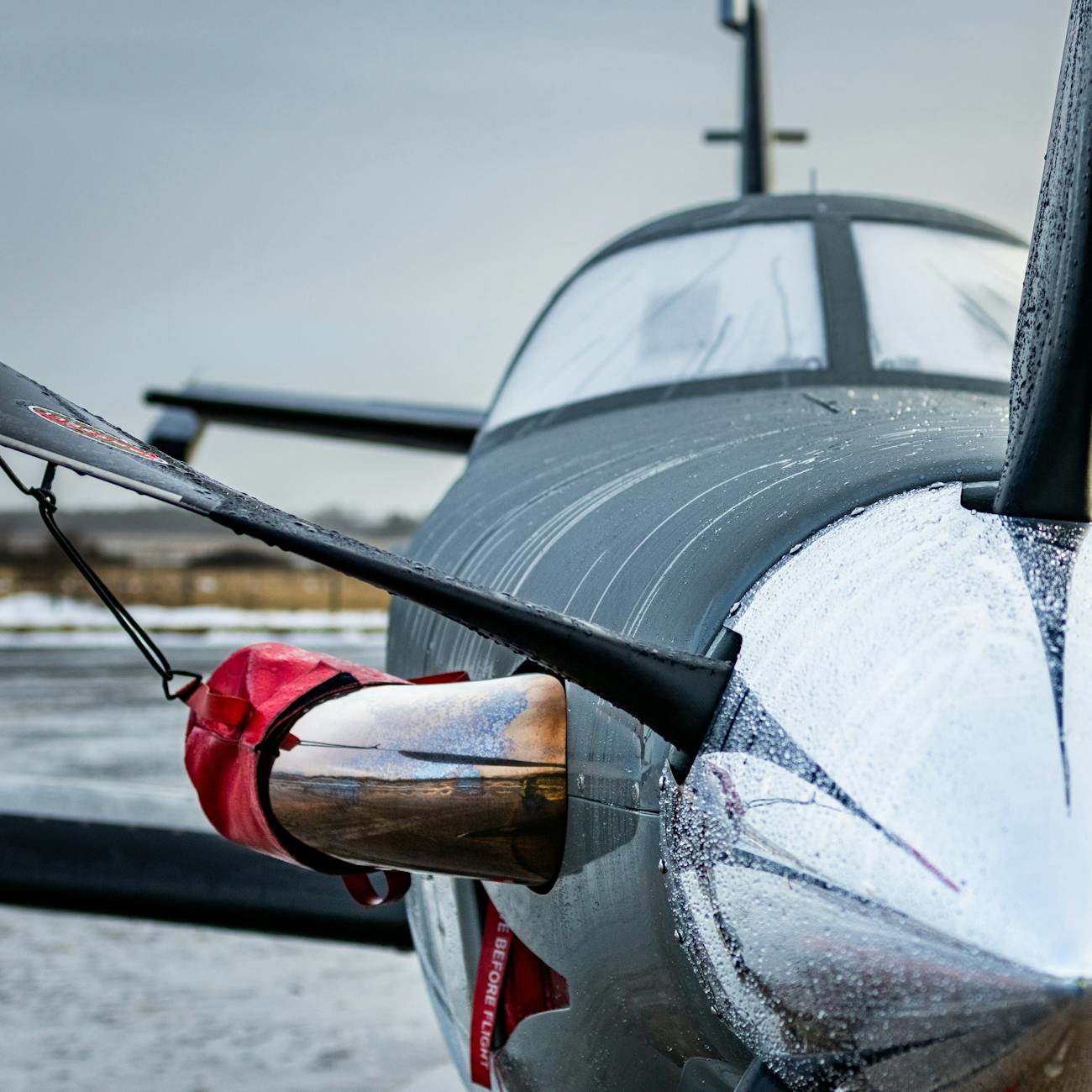
Aerodynamics: The study of how gases interact with moving bodies. In aerospace, it is crucial for understanding how an aircraft or spacecraft will perform in different flight regimes. For example, an aircraft with good aerodynamics will have less drag, allowing it to fly faster and more efficiently.
Airfoil: A shape designed to generate lift when air flows over it. Airfoils are used on wings, rotor blades, and other lifting surfaces. The shape of an airfoil can greatly affect its lift and drag characteristics.
Alternating Current (AC): An electric current that changes direction periodically. This is in contrast to Direct Current (DC), which flows in one direction only. AC is used in many aerospace applications, such as powering motors and transmitting electricity over long distances.
Avionics: The electronics used in aircraft and spacecraft for navigation, communication, and control. Examples of avionics systems include flight management computers, autopilots, and communication radios.
Bearing: A machine element that supports a rotating shaft and allows it to rotate freely. Bearings are used in aerospace applications to reduce friction and wear on moving parts.
Bleed Air: Compressed air that is taken from the engine compressor and used for various purposes in the aircraft, such as heating the cabin, starting the auxiliary power unit (APU), and pressurizing the hydraulic system.
Center of Gravity (CG): The point in an aircraft or spacecraft where the weight is evenly balanced. The CG affects the stability and handling of the aircraft, and must be carefully calculated and maintained within limits during flight.
Composite Material: A material made from two or more different materials, typically a reinforcing material and a matrix material. Composites are used in aerospace applications because of their high strength-to-weight ratio, corrosion resistance, and durability.
Control Surface: A movable surface used to control the attitude (pitch, roll, or yaw) of an aircraft or spacecraft. Examples of control surfaces include ailerons, elevators, and rudders.
Critical Angle of Attack: The angle of attack at which an airfoil stalls, or loses lift. The critical angle of attack is an important factor in aerodynamics and must be considered in the design of wings and other lifting surfaces.
DC Motor: A type of electric motor that uses Direct Current (DC) to produce rotational motion. DC motors are used in aerospace applications for various purposes, such as controlling flaps and slats, and operating pumps and valves.
Direct Current (DC): An electric current that flows in one direction only. DC is used in many aerospace applications, such as powering batteries and charging electronic devices.
Elastomer: A type of rubber or plastic material that can stretch and return to its original shape. Elastomers are used in aerospace applications for various purposes, such as sealing, damping, and insulation.
Electronic Control Unit (ECU): A computerized control system used to manage and regulate various functions in an aircraft or spacecraft. ECUs are used in aerospace applications for various purposes, such as controlling engines, managing fuel, and monitoring systems.
Engine Nacelle: A cowling or cover that surrounds and protects an aircraft engine. Engine nacelles are used in aerospace applications to reduce drag, improve aerodynamics, and protect the engine from damage.
Flap: A movable surface on the trailing edge of a wing that is used to increase lift and drag during takeoff and landing. Flaps are used in aerospace applications to improve aircraft performance and safety.
Fuselage: The main body of an aircraft or spacecraft, which typically contains the crew, passengers, and cargo. The fuselage is an important structural component and must be designed and built to withstand the forces of flight.
Hydraulic System: A system that uses a fluid (usually oil) to transmit force and motion. Hydraulic systems are used in aerospace applications for various purposes, such as controlling landing gear, brakes, and flight control surfaces.
Landing Gear: The wheels, skids, or other devices used to support an aircraft or spacecraft on the ground. Landing gear must be designed and built to withstand the forces of landing and takeoff, and must be able to retract into the aircraft or spacecraft to reduce drag during flight.
Lift: The force that opposes the weight of an aircraft or spacecraft and holds it in the air. Lift is generated by the movement of air over the wings or other lifting surfaces of the aircraft.
Payload: The cargo or equipment carried by an aircraft or spacecraft. The payload may include passengers, freight, fuel, or other items necessary for the mission.
Pitch: The upward or downward motion of an aircraft or spacecraft around the lateral axis. Pitch is controlled by the elevator, a movable surface on the horizontal stabilizer.
Pressure Altitude: The altitude above a standard datum plane, usually mean sea level (MSL). Pressure altitude is used in aerospace applications to calculate true airspeed, density altitude, and other performance parameters.
Roll: The side-to-side motion of an aircraft or spacecraft around the longitudinal axis. Roll is controlled by the ailerons, movable surfaces on the wings.
Rudder: A movable surface on the vertical stabilizer used to control the yaw of an aircraft or spacecraft. The rudder is used to align the aircraft with the desired flight path, and to maintain stability and control during flight.
Structural Analysis: The process of evaluating the strength and durability of a structure or component under various loads and conditions. Structural analysis is an important part of aerospace engineering, and is used to ensure the safety and performance of aircraft and spacecraft.
Thrust: The forward force produced by an aircraft or spacecraft engine. Thrust opposes the drag of the aircraft, and is used to propel the aircraft through the air.
Turbofan Engine: A type of jet engine that uses a fan to blow a large amount of air around the core of the engine. Turbofan engines are more fuel-efficient than turbojet engines and are used in a wide range of aerospace applications.
Turbojet Engine: A type of jet engine that uses a compressor to compress air, which is then mixed with fuel and burned in a combustion chamber. The hot gases produced by the combustion chamber are then expelled through a nozzle, producing thrust.
Yaw: The side-to-side motion of an aircraft or spacecraft around the vertical axis. Yaw is controlled by the rudder, a movable surface on the vertical stabilizer.
In conclusion, the aerospace industry uses a wide range of technical terms and vocabulary to describe the components, systems, and processes involved in the design, construction, and operation of aircraft and spacecraft. Understanding these terms and concepts is essential for anyone working in the aerospace field, and can help to ensure the safety and performance of aerospace products. By understanding the definitions and practical applications of these terms, aerospace professionals can communicate more effectively, solve problems more efficiently, and make better decisions in their work.
Key takeaways
- In aerospace, it is crucial for understanding how an aircraft or spacecraft will perform in different flight regimes.
- The shape of an airfoil can greatly affect its lift and drag characteristics.
- AC is used in many aerospace applications, such as powering motors and transmitting electricity over long distances.
- Examples of avionics systems include flight management computers, autopilots, and communication radios.
- Bearing: A machine element that supports a rotating shaft and allows it to rotate freely.
- Bleed Air: Compressed air that is taken from the engine compressor and used for various purposes in the aircraft, such as heating the cabin, starting the auxiliary power unit (APU), and pressurizing the hydraulic system.
- The CG affects the stability and handling of the aircraft, and must be carefully calculated and maintained within limits during flight.