
Military Applications of AI
Military applications of Artificial Intelligence (AI) are becoming increasingly prevalent and impactful in the field of military defense. In this Professional Certificate course, you will learn about the key terms and vocabulary related to …
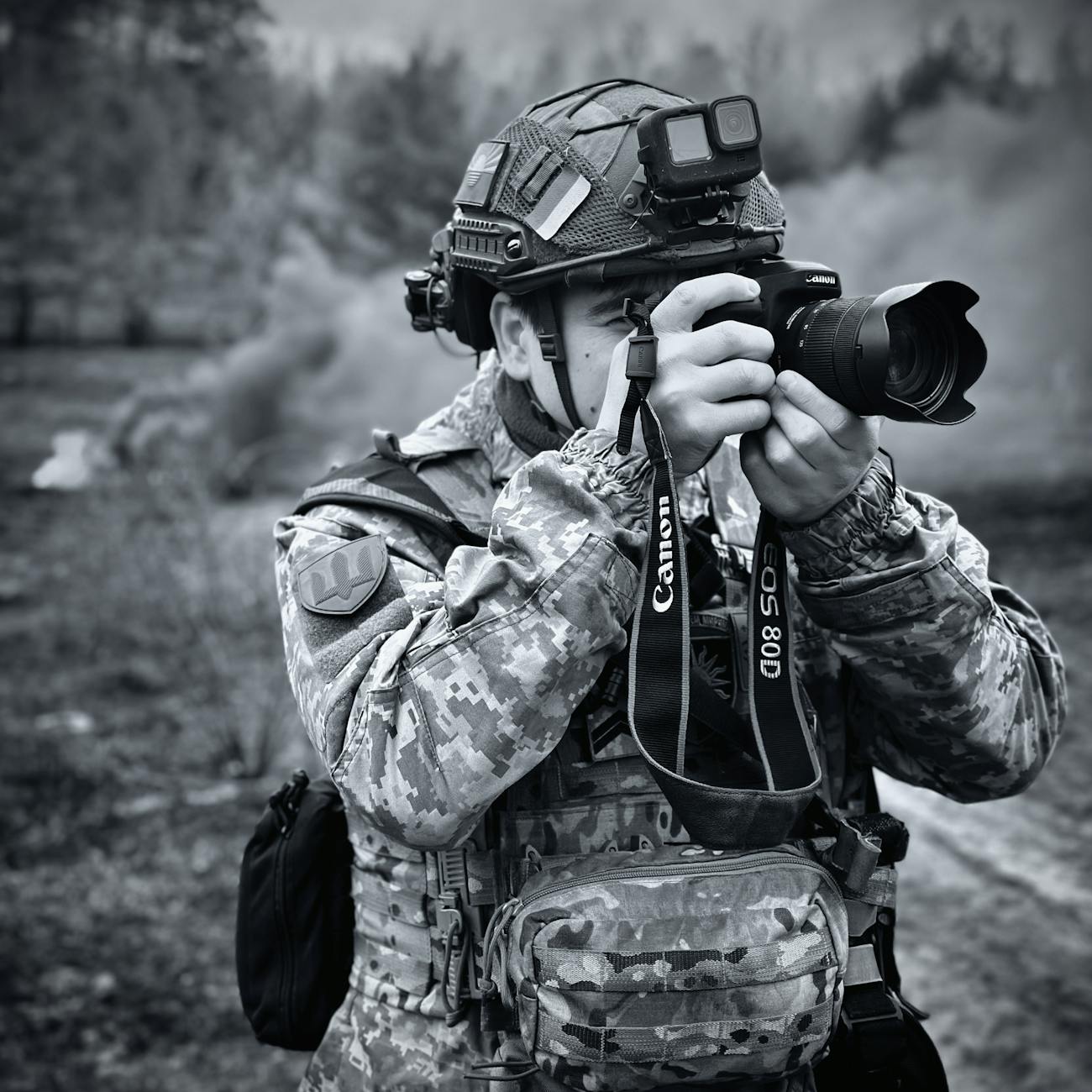
Military applications of Artificial Intelligence (AI) are becoming increasingly prevalent and impactful in the field of military defense. In this Professional Certificate course, you will learn about the key terms and vocabulary related to AI and its military applications.
1. Artificial Intelligence (AI)
AI refers to the development of computer systems that can perform tasks that usually require human intelligence, such as visual perception, speech recognition, decision-making, and language translation. In the context of military defense, AI is used to enhance the capabilities of military systems, improve decision-making, and increase efficiency.
2. Machine Learning (ML)
ML is a subset of AI that involves the use of statistical techniques to enable machines to improve at tasks through experience. ML algorithms analyze data, identify patterns, and make predictions or decisions without being explicitly programmed to do so. ML is used in military applications such as predictive maintenance, threat detection, and cybersecurity.
3. Deep Learning (DL)
DL is a subset of ML that uses artificial neural networks with many layers to learn and represent data. DL algorithms can process large amounts of data and learn complex patterns, making them useful for applications such as image and speech recognition, natural language processing, and autonomous systems.
4. Autonomous Systems
Autonomous systems are machines that can perform tasks without human intervention. In military applications, autonomous systems can be used for tasks such as reconnaissance, surveillance, and targeting. Autonomous systems can be equipped with AI algorithms to enable them to make decisions and adapt to changing circumstances.
5. Robotics
Robotics is the field of study that deals with the design, construction, and operation of robots. Robots are machines that can be programmed to perform a variety of tasks. In military applications, robots can be used for tasks such as explosive ordnance disposal, search and rescue, and transportation. Robots can be equipped with AI algorithms to enable them to make decisions and adapt to changing circumstances.
6. Computer Vision
Computer vision is the field of study that deals with enabling computers to interpret and understand visual information from the world. In military applications, computer vision can be used for tasks such as object detection, recognition, and tracking. Computer vision algorithms can be used to analyze images and videos from cameras, sensors, and other sources.
7. Natural Language Processing (NLP)
NLP is the field of study that deals with enabling computers to understand, interpret, and generate human language. In military applications, NLP can be used for tasks such as language translation, sentiment analysis, and text summarization. NLP algorithms can be used to analyze text data from sources such as social media, news articles, and intelligence reports.
8. Cybersecurity
Cybersecurity is the practice of protecting computer systems, networks, and data from unauthorized access, use, disclosure, disruption, modification, or destruction. In military applications, cybersecurity is critical for protecting sensitive information, communication systems, and critical infrastructure. AI algorithms can be used to detect and respond to cyber threats, as well as to predict and prevent cyber attacks.
9. Predictive Maintenance
Predictive maintenance is the practice of using data and analytics to predict when equipment will fail and schedule maintenance accordingly. In military applications, predictive maintenance can be used to reduce downtime, increase efficiency, and improve readiness. AI algorithms can be used to analyze data from sensors and other sources to predict equipment failures and optimize maintenance schedules.
10. Threat Detection
Threat detection is the practice of identifying and responding to potential threats to military assets, personnel, or infrastructure. In military applications, threat detection can be used to prevent attacks, protect personnel, and ensure mission success. AI algorithms can be used to analyze data from sensors, cameras, and other sources to detect potential threats and alert military personnel.
11. Autonomous Vehicles
Autonomous vehicles are vehicles that can operate without human intervention. In military applications, autonomous vehicles can be used for tasks such as transportation, reconnaissance, and delivery. Autonomous vehicles can be equipped with AI algorithms to enable them to make decisions and adapt to changing circumstances.
12. Swarm Intelligence
Swarm intelligence is the practice of using AI algorithms to enable groups of machines to work together as a cohesive unit. In military applications, swarm intelligence can be used for tasks such as surveillance, search and rescue, and targeting. Swarm intelligence algorithms can be used to enable groups of drones, robots, or other machines to work together to achieve a common goal.
13. Ethics
Ethics are the principles that govern the conduct of individuals and organizations. In military applications, ethics are critical for ensuring that AI is used responsibly and ethically. AI algorithms can be used to make decisions that have ethical implications, such as the use of lethal force. It is important to ensure that AI systems are designed and used in a way that aligns with ethical principles and values.
14. Bias
Bias is the tendency to favor one thing over another. In AI systems, bias can be introduced through the data used to train the system, the algorithms used to process the data, or the humans who design and use the system. Bias can lead to unfair or discriminatory outcomes, and it is important to ensure that AI systems are designed and used in a way that minimizes bias.
15. Explainability
Explainability is the ability to explain how an AI system makes decisions. In military applications, explainability is critical for ensuring that AI systems are transparent, understandable, and accountable. It is important to ensure that AI systems are designed and used in a way that enables humans to understand how the system is making decisions and why.
In conclusion, military applications of AI are becoming increasingly prevalent and impactful in the field of military defense. In this Professional Certificate course, you have learned about the key terms and vocabulary related to AI and its military applications. From AI and ML to autonomous systems, robotics, computer vision, NLP, cybersecurity, predictive maintenance, threat detection, autonomous vehicles, swarm intelligence, ethics, bias, and explainability, these terms and concepts are critical for understanding the role of AI in military defense. By applying these concepts in practical applications, you can help ensure that AI is used responsibly, ethically, and effectively in military defense.
Key takeaways
- Military applications of Artificial Intelligence (AI) are becoming increasingly prevalent and impactful in the field of military defense.
- AI refers to the development of computer systems that can perform tasks that usually require human intelligence, such as visual perception, speech recognition, decision-making, and language translation.
- ML is a subset of AI that involves the use of statistical techniques to enable machines to improve at tasks through experience.
- DL algorithms can process large amounts of data and learn complex patterns, making them useful for applications such as image and speech recognition, natural language processing, and autonomous systems.
- Autonomous systems can be equipped with AI algorithms to enable them to make decisions and adapt to changing circumstances.
- In military applications, robots can be used for tasks such as explosive ordnance disposal, search and rescue, and transportation.
- Computer vision is the field of study that deals with enabling computers to interpret and understand visual information from the world.