
Basic Sculpture Techniques
Armature – The internal framework that supports a clay sculpture, typically made from metal wire, wood, or PVC pipe. An armature provides stability during the building process and prevents the clay from collapsing under its own weight. For …
Armature – The internal framework that supports a clay sculpture, typically made from metal wire, wood, or PVC pipe. An armature provides stability during the building process and prevents the clay from collapsing under its own weight. For example, when creating a life‑size human figure, the sculptor first constructs a steel rod skeleton that mirrors the major joints and then adds clay in layers. A common challenge is ensuring the armature is strong enough to bear the load while still being lightweight enough to allow easy manipulation of the clay surface.
Wedging – The process of kneading clay to remove air bubbles, align the particles, and achieve a uniform consistency. Proper wedging improves the clay’s plasticity and reduces the risk of cracking during drying or firing. A typical technique is the “French‑style” wedge, where the clay is rolled into a slab, folded, and repeated several times. Beginners often struggle with over‑working the clay, which can cause it to become overly stiff and lose its workability.
Greenware – Clay that has been shaped but not yet fired. Greenware is still fragile and must be handled with care. It can be left to air‑dry, which gradually reduces moisture content, or it can be placed in a kiln for a low‑temperature “bisque” firing. An example of a greenware challenge is transporting a large unfinished sculpture; the weight and brittleness require supportive crates or padded surfaces to avoid breakage.
Slip – A liquid mixture of clay and water used for joining pieces, adding texture, or creating decorative surfaces. Slip acts as an adhesive when two clay parts are scored, brushed with slip, and then pressed together. In practice, a sculptor might score the edges of two slab sections, apply slip, and blend them seamlessly to form a continuous wall. Managing slip consistency is crucial; too watery a slip will not bond effectively, while an overly thick slip can obscure fine details.
Score – The act of making shallow, cross‑hatch marks on the surface of clay to increase the mechanical bond when two pieces are joined with slip. Scoring is essential for attaching limbs to a torso or adding decorative elements. A common mistake is neglecting to score adequately, leading to weak joints that may separate during drying or firing.
Coil Building – An additive technique where long, rolled strips of clay (coils) are stacked and blended to create forms. This method is especially useful for constructing vessels, organic shapes, and large architectural elements. For instance, a sculptor may roll a coil, lay it in a circular pattern to form a pot, and then smooth the interior and exterior surfaces. Challenges include maintaining even coil thickness and preventing visible seams, which require careful blending and surface finishing.
Slab Construction – Another additive approach that involves rolling clay into flat sheets (slabs) and cutting or shaping them into components. Slabs can be assembled to form boxes, walls, or complex geometric structures. An example is building a modernist sculpture composed of intersecting planes; each plane is cut from a slab and then joined using slip and scoring. Ensuring the slabs are of uniform thickness helps avoid warping during drying.
Carving – A subtractive technique where material is removed from a solid block of clay to reveal forms. Carving can be performed with wire tools, knives, or specialized modeling tools. A sculptor might carve a face from a block of clay, revealing features such as eyes, nose, and mouth. The main difficulty lies in controlling depth; excessive removal can weaken the structure or create unintended hollows.
Modeling – An additive technique where the artist builds up clay by hand, shaping it directly on the work surface. Modeling allows for spontaneous changes and is ideal for creating organic, flowing forms. For example, a sculptor modeling a bird may start with a basic mass and then refine feathers by adding small bits of clay. The challenge is maintaining structural integrity, especially when adding protruding elements that may sag.
Texture – The surface quality of a sculpture, which can be smooth, rough, patterned, or embellished. Textures are achieved through tools such as brushes, sponges, stamps, or even natural materials like leaves. A sculptor might press a textured mat onto wet clay to create a repetitive pattern for a decorative vase. Balancing texture with overall design is essential; overly busy surfaces can distract from the form.
Glaze – A glass‑like coating applied to bisque‑fired clay that melts during the final firing to produce a smooth, often glossy finish. Glazes can be transparent, opaque, colored, or matte, and they also provide a protective layer. For instance, a sculptor may select a deep cobalt glaze to accentuate the depth of a sculpted drapery. Glazing challenges include controlling runoff, avoiding glaze pooling, and preventing glaze defects such as crazing or pinholing.
Bisque Firing – The first firing of a clay piece, typically at a lower temperature (around 900–1000°C), which hardens the clay into a porous, durable state. Bisque firing prepares the piece for glazing and reduces the risk of damage during handling. A practical consideration is timing; the bisque must be fully cooled before glazing, which can add several days to the production schedule.
Kiln – The furnace used for firing clay objects. Kilns can be electric, gas, or wood‑fired, each offering different atmospheric conditions. An electric kiln provides a controllable, oxidation environment, while a wood kiln can create reduction atmospheres that affect glaze colors. Proper kiln loading, temperature ramping, and ventilation are critical to avoid defects such as cracking or glaze discoloration.
Reduction – A firing atmosphere with limited oxygen, often achieved in a wood or gas kiln, which can alter the chemistry of glazes and clay bodies, producing unique colors and effects. For example, copper oxide glazes may turn from green to red under reduction. Mastery of reduction requires careful monitoring of fuel and airflow; mismanagement can lead to unpredictable results.
Oxidation – A firing environment rich in oxygen, typical of electric kilns, where the clay and glazes behave predictably. Oxidation firing stabilizes colors and promotes even glaze development. While more straightforward than reduction, oxidation still demands precise temperature control to prevent warping or glaze defects.
Drying – The process of removing moisture from clay before firing. Controlled drying prevents rapid shrinkage that can cause cracks. Techniques include covering the piece with plastic to slow drying, placing it in a humidity‑controlled room, or using a drying rack. A common pitfall is over‑drying, which can make the clay too brittle to handle.
Firing Schedule – The planned temperature increase and decrease rates for a kiln, including soak times at specific temperatures. A typical schedule might ramp up to 600°C over two hours, hold for 30 minutes, then rise to 950°C for bisque. Proper scheduling reduces thermal shock and ensures even vitrification. Deviating from the schedule can cause uneven coloration or structural failure.
Vitrification – The transformation of clay into a glass‑like state during firing, where the particles fuse together, reducing porosity. Vitrified clay is stronger and less absorbent. Achieving proper vitrification depends on the clay body composition and firing temperature. Under‑firing results in a porous, weak piece, while over‑firing can cause melt and distortion.
Slip Casting – A technique where a liquid clay slip is poured into a plaster mold, allowing the plaster to absorb water and form a solid wall. Slip casting is useful for producing thin‑walled forms with consistent thickness. For example, a sculptor may create a plaster mold of a human head, pour slip, and after a set time remove the solidified clay shell. Challenges include controlling drying time to avoid warping and ensuring the mold is properly sealed to prevent leakage.
Press Molding – A method where clay is pressed into a rigid mold, often made of plaster or silicone, to duplicate forms. Press molding is efficient for producing multiple copies of a design, such as a series of decorative relief panels. The sculptor must apply even pressure to avoid air pockets and ensure detail fidelity.
Reproduction – The act of creating multiple copies of a sculpture, often using molds. Reproduction can be achieved through slip casting, press molding, or 3‑D printed molds. While reproductions allow for broader distribution, maintaining quality across copies is essential. Issues like mold wear, inconsistent slip viscosity, and variable firing conditions can affect the final outcome.
Surface Treatment – Any process applied to a sculpture’s surface to alter its appearance or texture, including sanding, polishing, and applying patinas. For clay, sanding may be done after bisque firing to smooth rough spots, while polishing can be performed on glazed surfaces to enhance shine. Careful surface treatment can elevate the visual impact but must be balanced against the risk of damaging delicate details.
Patina – A surface finish that gives a sculpture an aged or metallic look, often achieved through chemical treatments or glazes containing metallic oxides. In clay sculpture, a patina may be simulated by applying a glaze with iron oxide and then firing in reduction. The result can mimic bronze or copper surfaces, adding depth to the work.
Toolset – The collection of implements used for shaping, joining, and detailing clay. Common tools include wooden modeling tools, metal scrapers, ribbon tools, loop tools, wire cutters, and sponges. Each tool serves a specific purpose; for instance, a ribbon tool is ideal for smoothing seams, while a wire cutter can trim excess clay. Mastery of the toolset enables the artist to execute fine details efficiently.
Wire Cutters – Small, sharp tools used to cut away excess clay, trim joints, or shape sharp edges. Wire cutters are indispensable for refining the silhouette of a sculpture, especially when removing unwanted material after a coil build. The challenge lies in maintaining a steady hand to avoid unintended cuts that could weaken the structure.
Loop Tool – A curved tool used for carving and shaping, particularly effective for removing material from concave surfaces. Loop tools allow the sculptor to hollow out a form without compromising the surrounding clay. For example, when hollowing the interior of a large vase, a loop tool can be employed to gradually deepen the cavity while preserving wall thickness.
Ribbon Tool – A flat, flexible tool used for smoothing and blending seams. Ribbon tools are often employed after scoring and slipping two pieces together, ensuring a seamless transition. The tool’s flexibility makes it suitable for working on both flat and curved surfaces.
Sponges – Moisture‑laden pads used for smoothing wet clay, adding subtle texture, or cleaning excess slip. Natural sea sponges are preferred for their irregular pores, which can impart a gentle texture. Over‑wetting the surface with a sponge can cause loss of detail, so artists must balance moisture application.
Brushes – Fine‑tooth tools used for applying slip, glaze, or creating texture. Brushes can also be used to feather edges after scoring. Synthetic brushes are often chosen for their durability in kiln environments. An example of brush use is applying a thin line of slip to define a seam before blending.
Firing Defects – Unwanted outcomes that occur during the firing process, such as cracking, warping, glaze crazing, or blisters. Understanding the causes of defects allows sculptors to adjust their techniques. For instance, uneven drying can lead to cracks, while rapid temperature changes may cause warping. Regular kiln maintenance and accurate temperature monitoring help mitigate these issues.
Cracking – The formation of fissures in the clay body, often resulting from uneven drying, rapid heating, or excessive glaze thickness. Cracks can compromise the structural integrity and aesthetic of a sculpture. Preventative measures include allowing the piece to dry slowly, using uniform glaze layers, and adhering to a controlled firing schedule.
Warpage – Distortion of a sculpture’s shape caused by differential shrinkage during drying or firing. Warping is common in large, thin‑walled pieces where one side dries faster than the other. To counteract warpage, artists may reinforce the piece with internal supports, fire at a slower ramp rate, or design the sculpture with balanced mass distribution.
Crazing – A network of fine cracks that appears in the glaze surface, typically due to a mismatch between the clay body’s contraction and the glaze’s expansion. Crazing can be aesthetically pleasing in some contexts but often indicates a technical issue. Adjusting the glaze composition, selecting a compatible clay body, or modifying the firing temperature can reduce crazing.
Blistering – The formation of bubbles or domes on the glaze surface, often caused by trapped gases or moisture in the clay. Blistering can be minimized by thoroughly drying the piece, ensuring proper glaze application, and using a clean kiln atmosphere. In some artistic contexts, controlled blistering is used deliberately to create a textured effect.
Reduction Glaze – A glaze formulated to develop specific colors or textures when fired in a reduction atmosphere. These glazes often contain copper, iron, or manganese oxides that respond dramatically to low‑oxygen conditions. For a sculptor aiming for a copper‑green finish, a reduction glaze will shift hue during firing, offering a dynamic visual result.
Oxidation Glaze – A glaze designed for stable performance in an oxidation environment, typically yielding predictable colors. Oxidation glazes are suitable for electric kilns and are favored for their reliability. An example is a white matte glaze that provides a uniform background for painted details.
Matte Finish – A non‑reflective surface achieved through specific glaze formulations or post‑firing treatments such as sandblasting. Matte finishes can emphasize form and texture without the distraction of shine. Artists may choose a matte glaze to highlight the sculptural silhouette.
Glossy Finish – A high‑sheen surface created by a glaze that melts into a glassy layer. Glossy finishes enhance color vibrancy and can protect delicate details. However, glossy surfaces may also mask subtle textures, so artists must decide based on the intended visual impact.
Underglaze – Colored clay slips applied to the clay body before glazing, allowing for painted designs that become sealed beneath a transparent glaze. Underglazes are useful for adding intricate motifs, such as floral patterns on a ceramic figure. The challenge lies in ensuring the underglaze adheres well and does not smudge during firing.
Engobes – Thin layers of colored clay applied to the surface of a piece to create a uniform hue before glazing. Engobes can be applied by brushing, spraying, or dipping. They provide a base color that influences the final glaze appearance, useful for achieving tonal depth.
Slip Trailing – The technique of applying slip in controlled lines or dots to create decorative patterns, similar to drawing with a pen. Slip trailing can be used to add veins, wrinkles, or ornamental borders. Consistent pressure and a fine‑tipped nozzle are essential for clean lines.
Pinching – An informal method of shaping clay by squeezing and pulling with the fingers, often used for small forms or initial massing. Pinching allows rapid exploration of organic shapes but offers limited precision. To avoid weakening the structure, artists should combine pinching with supportive coils or slabs.
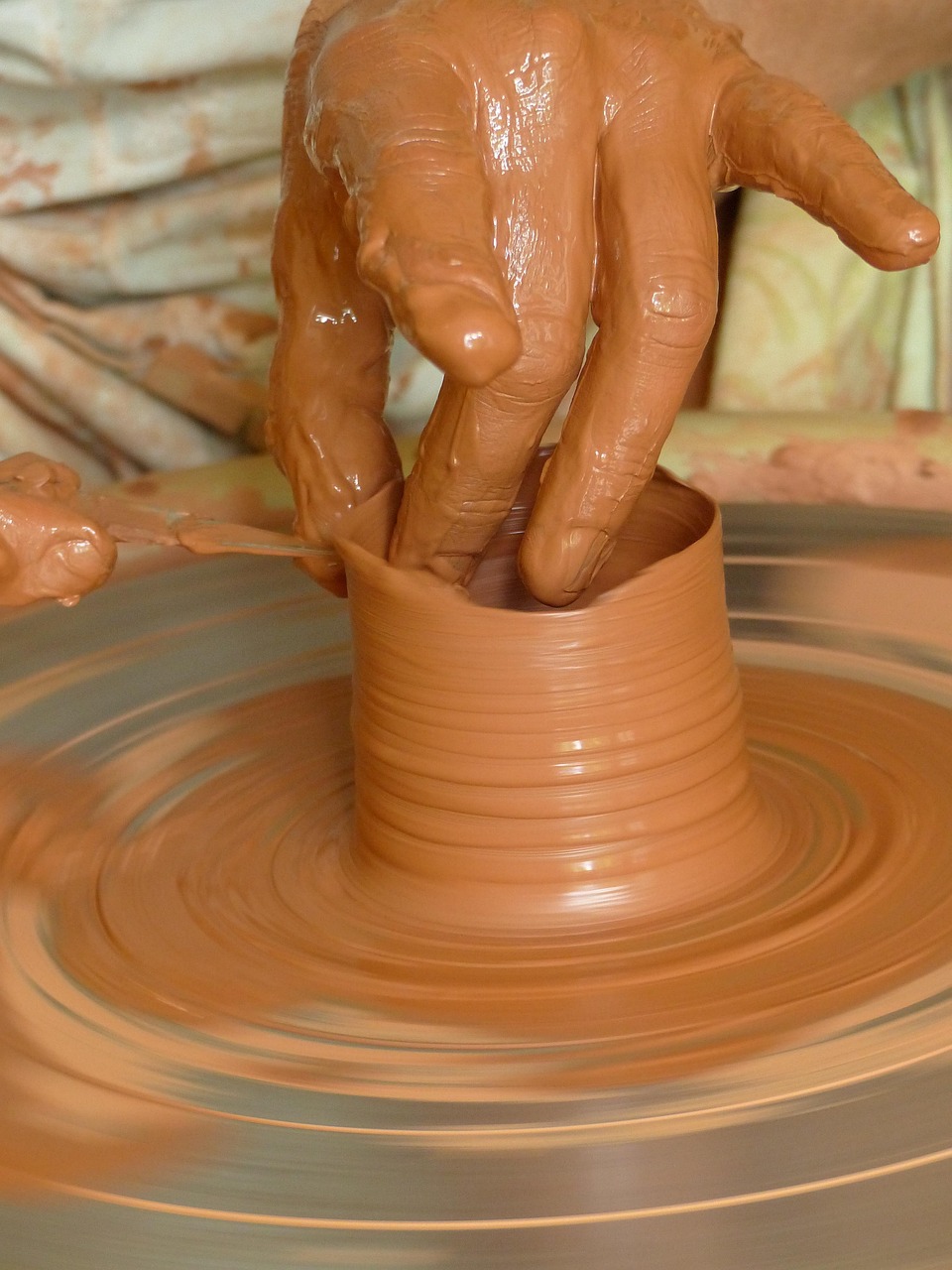
Throwing – The process of shaping clay on a potter’s wheel, primarily used for creating symmetrical vessels. While not always central to sculptural practice, throwing can provide a base form that is later altered through carving or adding coils. Mastery of wheel control is necessary to achieve even walls and balanced proportions.
Hand‑building – A collective term for techniques that construct forms without a wheel, encompassing coil, slab, and pinch methods. Hand‑building is the foundation of most clay sculpture curricula, encouraging tactile engagement and creative freedom. The primary challenge is maintaining structural integrity across varied shapes.
Hollowing – The removal of interior material to reduce weight and prevent cracking during firing. Hollowing is critical for large sculptures, as solid clay pieces can explode in the kiln due to steam buildup. The process often involves creating a uniform wall thickness, typically 6–10 mm, using interior supports or a hollowing tool.
Support Armature – Temporary structures, such as wooden dowels or metal rods, inserted into a clay piece to maintain shape while the interior is hollowed. Supports are removed after the piece reaches a leather‑hard stage, when the clay holds its form. Proper placement of supports ensures even drying and reduces stress points.
Leather‑Hard Stage – The phase of drying where the clay is firm enough to hold its shape but still retains enough moisture for carving or attaching additional pieces. Working at the leather‑hard stage allows sculptors to refine details without the risk of collapse. Over‑drying beyond this stage can make carving difficult and increase the chance of cracks.
Bone‑Dry Stage – The point at which the clay has lost all moisture and becomes hard and brittle. Bone‑dry pieces can be handled without deformation but are vulnerable to breakage if subjected to impact. At this stage, the sculpture is ready for bisque firing. Handling bone‑dry works with care, often using padded supports.
Firing Atmosphere – The combination of temperature, oxygen level, and kiln gases that influence how clay and glaze react. Controlling the atmosphere is essential for achieving desired glaze colors and avoiding defects. Artists must monitor kiln vents, fuel sources, and temperature probes to maintain the intended atmosphere.
Thermal Shock – The stress caused by rapid temperature changes, which can lead to cracking or warping. To prevent thermal shock, the firing schedule should include gradual heating and cooling ramps, especially for large or thin‑walled pieces. Allowing the kiln to cool slowly after the final soak helps preserve the integrity of the sculpture.
Ventilation – The process of allowing gases to escape the kiln during firing, essential for removing moisture, combustible gases, and carbon monoxide. Proper ventilation prevents pressure buildup that could cause glaze defects or kiln damage. Vent placement and size must be matched to the kiln’s size and the fuel type.
Kiln Shelf – The interior platform on which sculptures are placed during firing. Shelves are often made of refractory materials and can be stacked to create multiple firing zones. Positioning a sculpture on the appropriate shelf height influences heat exposure and glaze development. Heavy pieces should be placed on lower shelves for stability.
Loading Techniques – The method of arranging sculptures within the kiln to ensure even heat distribution and to avoid contact between pieces that could cause glaze transfer. Adequate spacing, the use of kiln stilts, and strategic placement of larger works are part of effective loading. Improper loading can result in uneven firing and surface blemishes.
Stilt – A small metal support used to elevate a sculpture above the kiln shelf, allowing glaze to flow underneath and preventing the piece from sticking to the shelf. Stilt placement must be carefully planned to avoid leaving unwanted marks on the glaze. For delicate works, micro‑stilts can be employed to minimize visual impact.
Glaze Application Methods – Various ways to apply glaze, including dipping, brushing, spraying, and pouring. Dipping provides a uniform coating for small objects, while brushing allows for selective coverage and detail work. Spraying offers a fine mist ideal for large surfaces, and pouring can fill intricate cavities. Each method requires specific preparation and safety precautions, such as proper ventilation and protective gear.
Safety Practices – Essential protocols for working with clay, glazes, and kilns. These include wearing gloves, masks, and eye protection when handling dry powders, ensuring proper kiln ventilation to avoid inhalation of fumes, and maintaining fire safety measures around the kiln area. Regular equipment inspection and proper storage of hazardous materials are also critical.
Material Compatibility – The relationship between the chosen clay body and glaze, which determines the final appearance and durability of the sculpture. Selecting a compatible glaze prevents issues like crazing or glaze peeling. For example, a high‑fire stoneware clay works best with glazes formulated for stoneware, while low‑fire earthenware requires a different glaze chemistry.
Clay Body – The specific formulation of clay, including the proportion of kaolin, ball clay, feldspar, and other additives. Different clay bodies possess distinct plasticity, shrinkage rates, and firing temperatures. A sculptor must choose a clay body that aligns with the intended scale, detail level, and firing schedule. Misalignment can cause unexpected cracking or distortion.
Plasticity – The ability of clay to be shaped without cracking. Plasticity is influenced by particle size, water content, and the presence of additives such as grog or sand. High plasticity clays are ideal for intricate detailing, while lower plasticity clays may be preferred for structural components. Adjusting moisture levels during work can enhance plasticity.
Grog – Pre‑fired, ground ceramic particles added to clay to improve its strength, reduce shrinkage, and increase texture. Grog is especially useful in large sculptures where the risk of cracking is higher. Adding 10–20 % grog by weight can provide a balance between workability and structural stability. The size of the grog particles influences the surface texture; fine grog yields smoother finishes, while coarse grog creates a rougher feel.
Sand – Fine mineral particles incorporated into the clay body to increase strength and reduce shrinkage. Sand can also be used as a sculptural element, applied to the surface to create a textured pattern. The proportion of sand must be carefully measured, as excessive sand can diminish plasticity and make the clay difficult to shape.
Firing Temperature – The peak temperature reached during a kiln cycle, typically measured in degrees Celsius. Low‑fire glazes fire between 950–1100 °C, while high‑fire glazes require 1200–1300 °C. Selecting the appropriate temperature ensures proper vitrification and glaze maturation. Exceeding the recommended temperature can cause glaze run‑off and distortion.
Soak Time – The period during which the kiln holds a specific temperature before cooling. Soak time allows glazes to mature and the clay body to complete its chemical transformations. A typical soak at 1000 °C for bisque firing might last 30 minutes, while a glaze soak could be extended to an hour for deeper color development.
Ramp Rate – The speed at which temperature increases or decreases in the kiln. A slow ramp rate (e.G., 50 °C per hour) reduces thermal shock, especially for large or thick pieces. Rapid ramp rates are sometimes used for small, uniform works but increase the risk of cracking. Adjusting the ramp rate based on piece size and thickness is a key decision in the firing plan.
Cooling Cycle – The controlled reduction of temperature after the final soak, essential for preventing thermal shock. Allowing the kiln to cool naturally, often over several hours, preserves glaze integrity and reduces the chance of warping. Opening the kiln too early can cause rapid temperature drops and damage the sculpture.
Glaze Testing – The practice of applying small glaze samples to test tiles before committing to a full sculpture. Testing helps assess color, texture, and compatibility with the clay body. Artists typically fire a series of test tiles, evaluating the results, and adjusting glaze ratios accordingly. This step minimizes costly mistakes on large works.
Color Theory – Understanding how colors interact, which influences glaze selection and surface decoration. Complementary colors, analogous schemes, and contrast all play roles in the visual impact of a sculpture. For instance, a warm orange glaze may be balanced with a cool blue underglaze to create dynamic tension.
Design Development – The process of evolving an initial concept into a fully realized sculpture, including sketching, maquette creation, and material experimentation. Early sketches help define proportions, while small clay maquettes allow the artist to explore form and balance before scaling up. Iterative development reduces the risk of structural problems later.
Scale Modeling – Creating a smaller version of a large sculpture to test structural elements, such as armature placement and load distribution. Scale models can be made from inexpensive materials like foam or wire before committing to clay. They serve as a reference for measurements and help anticipate challenges in the full‑size piece.
Structural Analysis – The assessment of how forces, weight, and material properties interact within a sculpture. Artists may calculate load‑bearing points, consider the center of gravity, and plan reinforcement accordingly. For example, a cantilevered arm extending from a torso requires a robust internal support to prevent sagging.
Reinforcement Techniques – Methods used to strengthen a sculpture, including the insertion of metal rods, mesh, or fibrous materials within the clay. Reinforcement is especially important for thin‑walled vessels or elongated limbs. The reinforcement must be embedded before the clay reaches the leather‑hard stage to ensure proper integration.
Finishing Techniques – Final steps taken after firing, such as polishing, applying wax, or adding surface coatings. Wax can be buffed to a subtle sheen, enhancing the tactile quality of a sculpture. Polishing is typically performed on glazed surfaces using soft cloths, while matte finishes may be left untouched to emphasize form.
Documentation – Recording the process, materials, and settings used for each sculpture. Detailed notes on clay recipes, glaze formulas, firing schedules, and challenges encountered aid in reproducibility and future reference. Photographic documentation at each stage—raw, greenware, bisque, and final—provides visual tracking of progress.
Problem‑Solving Strategies – Approaches for addressing common issues such as unexpected cracking, glaze defects, or kiln malfunctions. Strategies include adjusting drying times, revisiting the glaze‑clay compatibility chart, and conducting kiln calibration tests. Developing a systematic troubleshooting method empowers sculptors to refine their practice continuously.
Environmental Considerations – Awareness of the ecological impact of materials and processes, including the sourcing of clay, energy consumption of kilns, and waste management of glaze runoff. Artists can mitigate environmental impact by using recycled clay, energy‑efficient kilns, and proper disposal of hazardous chemicals. Sustainable practices contribute to responsible studio management.
Professional Standards – Guidelines that ensure the quality, safety, and ethical presentation of sculptural work. Adhering to industry standards, such as ISO guidelines for kiln operation or local building regulations for studio spaces, maintains a safe environment and enhances the credibility of the artist’s work. Professional standards also encompass proper labeling of finished pieces for exhibitions.
Exhibition Preparation – The steps required to ready a sculpture for display, including mounting, lighting considerations, and protective packaging. Mounting may involve creating a base from wood or metal, securely attaching the sculpture, and ensuring stability. Lighting choices can accentuate texture and glaze, while protective packaging safeguards the work during transport.
Conservation – The long‑term care of clay sculptures, focusing on preventing deterioration caused by humidity, temperature fluctuations, and handling. Conservation measures include storing pieces in climate‑controlled environments, using archival‑grade materials for packaging, and performing periodic condition assessments. Understanding the material’s vulnerabilities guides appropriate preservation strategies.
Innovation in Clay Sculpture – The exploration of new techniques, materials, and technologies that expand the possibilities of the medium. Contemporary sculptors may integrate 3‑D printing to produce intricate molds, experiment with alternative firing methods such as microwave or solar kilns, or incorporate mixed media like metal and glass. Embracing innovation encourages artistic growth and keeps the practice evolving.
Collaborative Projects – Working with other artists, designers, or engineers to create large‑scale installations or interdisciplinary works. Collaboration often requires clear communication of technical requirements, such as load‑bearing calculations for a public sculpture or compatibility of mixed materials. Successful teamwork leverages diverse expertise to achieve ambitious artistic visions.
Time Management – Planning and allocating sufficient time for each stage of the sculptural process, from concept development to final firing. Effective time management prevents rushed drying, which can cause cracks, and allows for thorough glaze testing. Artists may create a project timeline that includes milestones for armature construction, clay building, drying phases, and kiln scheduling.
Budget Planning – Estimating costs for materials, kiln operation, studio space, and ancillary expenses. Accurate budgeting ensures resources are available for high‑quality clays, specialty glazes, and necessary tools. Tracking expenses throughout the project helps identify areas where cost‑saving measures can be applied without compromising artistic integrity.
Legal and Copyright Issues – Understanding the ownership rights of original sculptural works, including the protection of designs and the use of licensed materials. Artists should register their creations where appropriate, respect intellectual property when referencing existing works, and ensure that any collaborative contributions are properly documented and agreed upon.
Feedback and Critique – Engaging with peers, mentors, and audiences to receive constructive comments that inform future work. Structured critique sessions focus on aspects such as form, surface treatment, structural soundness, and conceptual clarity. Incorporating feedback helps refine technique and enhance the overall quality of the sculpture.
Continuous Learning – The commitment to ongoing skill development through workshops, research, and experimentation. Staying informed about emerging glaze technologies, new kiln designs, and evolving safety standards keeps the sculptor’s practice current and competitive. Lifelong learning fosters adaptability and resilience in the ever‑changing field of clay sculpture.
Portfolio Development – Curating a collection of completed works that showcase a range of techniques, styles, and conceptual depth. A strong portfolio demonstrates mastery of basic sculpture vocabulary, such as armature design, slip joining, glaze application, and firing precision. Including process photographs and written explanations enriches the portfolio’s narrative.
Client Communication – Effectively conveying technical requirements, timelines, and care instructions to patrons commissioning sculptures. Clear communication ensures that clients understand the materials, handling procedures, and installation considerations, reducing the likelihood of misunderstandings or damage after delivery.
Installation Logistics – Planning for the safe transport and placement of a sculpture on site, which may involve rigging, crane usage, or modular assembly. Understanding the sculpture’s weight, dimensions, and structural points informs the selection of appropriate equipment and personnel. Detailed installation plans minimize risk and ensure a smooth unveiling.
Risk Assessment – Identifying potential hazards associated with each stage of the sculptural process, from handling heavy armatures to operating kilns. Conducting a formal risk assessment helps implement control measures, such as using mechanical lifts for heavy components, wearing protective gear, and establishing emergency protocols.
Documentation of Failures – Recording instances where a technique did not produce the expected result, analyzing the cause, and adjusting future approaches. For example, noting that a particular glaze caused blistering due to excessive moisture can lead to revised glaze recipes or altered firing schedules. Learning from failures accelerates skill acquisition.
Material Sourcing – Selecting reputable suppliers for clay, glazes, and tools, while considering factors such as consistency, batch variation, and environmental impact. Testing small batches of new clay before committing to a large project avoids surprise incompatibilities. Establishing relationships with trusted vendors supports reliable material delivery.
Technical Vocabulary – Mastery of the specific terms used within the field, which enables clear communication with peers and instructors. Familiarity with words such as “plasticity,” “vitrification,” “bisque,” and “reduction” ensures that discussions about technique are precise and efficient. Regular review of this vocabulary reinforces understanding and application.
Artistic Intent – The conceptual rationale behind material choices, surface treatments, and structural decisions. Articulating intent helps guide technical decisions; for instance, choosing a rough grog texture to evoke an ancient aesthetic informs the selection of a matte glaze and the decision to leave some surface marks visible. Aligning technique with concept creates cohesive work.
Cross‑Disciplinary Knowledge – Applying insights from fields such as engineering, chemistry, and design to inform sculptural practice. Knowledge of material science aids in predicting clay behavior, while engineering principles support the creation of stable armatures. Integrating design thinking fosters innovative forms and functional considerations.
Mentorship – Engaging with experienced sculptors who can provide guidance on technique, studio management, and career development. Mentors can share practical tips, such as optimal kiln loading patterns or effective slip recipes, accelerating the learning curve for emerging artists. Reciprocal mentorship relationships enrich both parties.
Community Engagement – Participating in local art events, workshops, and exhibitions to share knowledge and receive feedback. Community involvement nurtures a supportive network, offers opportunities for collaboration, and raises public awareness of the value of clay sculpture. Engaging audiences through demonstrations also educates them about the craft.
Ethical Practice – Upholding standards of honesty, respect, and responsibility throughout the artistic process. This includes proper attribution of influences, transparent communication about project limitations, and responsible disposal of hazardous materials. Ethical practice builds trust with clients, collaborators, and the broader artistic community.
Future Trends – Anticipating developments such as digital fabrication, sustainable clay alternatives, and interactive installations that respond to viewer presence. Staying attuned to these trends equips sculptors to adapt their practice, integrate new tools, and remain relevant in a dynamic artistic landscape.
Personal Reflection – Regularly assessing one’s progress, challenges overcome, and areas for growth. Reflective practice encourages mindfulness, fosters continuous improvement, and deepens the connection between the artist and their medium. Keeping a reflective journal alongside technical documentation provides a holistic view of artistic evolution.
Key takeaways
- For example, when creating a life‑size human figure, the sculptor first constructs a steel rod skeleton that mirrors the major joints and then adds clay in layers.
- Wedging – The process of kneading clay to remove air bubbles, align the particles, and achieve a uniform consistency.
- An example of a greenware challenge is transporting a large unfinished sculpture; the weight and brittleness require supportive crates or padded surfaces to avoid breakage.
- Managing slip consistency is crucial; too watery a slip will not bond effectively, while an overly thick slip can obscure fine details.
- Score – The act of making shallow, cross‑hatch marks on the surface of clay to increase the mechanical bond when two pieces are joined with slip.
- For instance, a sculptor may roll a coil, lay it in a circular pattern to form a pot, and then smooth the interior and exterior surfaces.
- Slab Construction – Another additive approach that involves rolling clay into flat sheets (slabs) and cutting or shaping them into components.